





Today’s Conflicts Destabilizing the Global Village
The world is entering 2026 with a troubling sense that conflict is no longer episodic; it is becoming ambient. The Russia–Ukraine war continues to grind on with fresh territorial shifts and ongoing strikes, keeping Europe on a war footing and injecting uncertainty into global markets.
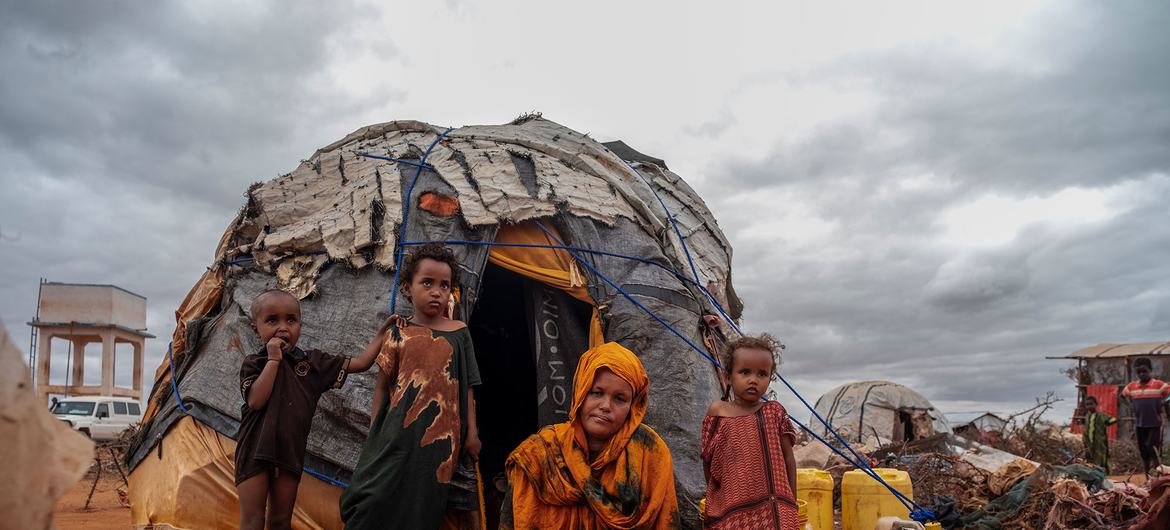
Gaza remains a humanitarian catastrophe even under fragile ceasefire arrangements, with basic shelter and aid delivery collapsing under weather, restrictions, and political deadlock.
Iran is again in the grip of widespread unrest driven by economic deterioration and political repression, with reports of deaths and an intensifying crackdown condition that historically increases the risk of internal radicalization or external confrontation.
And, in the most dramatic hemispheric jolt in decades, the United States has announced a direct military operation in Venezuela culminating in the capture of President Nicolás Maduro and his wife.
For a general audience in Trinidad and Tobago, the question is straightforward: how does a world full of faraway flashpoints destabilize peace here at home?
The answer is that “the global village” is real in practice. Shocks transmit through trade routes, capital markets, migration patterns, criminal networks, and the credibility of international rules that small states depend upon.
When multiple conflicts burn simultaneously, their effects are not additive; they compound. We need to pay attention.
Trinidad and Tobago is an energy state, a trading state, and a small financial node that depends on predictable shipping, stable insurance costs, and functioning correspondent banking relationships.
When major wars persist, risk premiums rise. In Ukraine, continued fighting and evacuations underscore that the conflict remains active and politically unresolved, keeping uncertainty in European energy and defence demand.
In the Middle East, the humanitarian collapse in Gaza signals not only suffering but also the possibility of renewed escalation that can disrupt shipping confidence and amplify energy price volatility.
Even when prices move in directions that appear beneficial in the short term, volatility is poison for planning: it distorts government revenue expectations, private investment decisions, and foreign exchange management.
A destabilized world does not merely raise or lower prices; it makes them unpredictable, and unpredictability is what punishes small, import-dependent economies like ours.
World disorder also feeds the security ecosystem that the Caribbean already struggles to contain. Conflict zones generate weapons flows, trained fighters, and revenue streams that plug into transnational organized crime.
This is not theoretical. Haiti’s security crisis, where armed gangs have effectively overrun much of Port-au-Prince and sustained violence has displaced large numbers, illustrates how quickly state fragility can become a regional problem.
When governance collapses and armed actors thrive, trafficking routes adapt. The Caribbean is geographically positioned between major producers, consumers, and transit corridors.
A world with more conflict nodes is a world with more illicit supply and more opportunities for criminal entrepreneurs, meaning greater pressure on policing, ports, and border controls at home.
Systemic instability
Beyond the named conflicts, several other arenas are deepening the sense of systemic instability. Sudan’s war, which erupted in 2023, continues to generate one of the world’s worst humanitarian emergencies, with warnings of severe needs and the conflict’s persistence shaping displacement and regional insecurity.
Myanmar remains fractured after the 2021 coup; the junta’s attempt to stage elections under conflict conditions highlights ongoing legitimacy disputes rather than resolution and underscores that internal wars can become semi-permanent.
In the eastern Democratic Republic of Congo, intensified fighting involving armed groups like M23 and militia violence continues to destabilize Central Africa and absorb international attention and aid resources.
In the Sahel, expanding jihadist insurgencies persist across multiple states, eroding regional integration and creating chronic insecurity that reverberates into migration and global counterterrorism priorities.
And Yemen, already synonymous with protracted war, is now seeing a dangerous new phase, with conflict dynamics shifting among Saudi-backed authorities and UAE-backed southern separatists, an escalation that risks widening regional fault lines.
When these crises unfold concurrently, global peace is destabilized in three practical ways that Trinidad and Tobago should take note of.
First, multilateral bandwidth collapses: the UN system and major donors face overstretch, and humanitarian financing becomes harder just as needs surge globally.
Second, polarization intensifies: societies and governments frame conflicts in absolute moral terms, reducing the political space for negotiated compromise.
Third, domestic vulnerabilities become amplifiers: countries with tight fiscal space, fragile institutions, or severe crime problems experience international shocks more painfully and recover more slowly.
The policy implication for Trinidad and Tobago is not panic; it is sober preparation. In a destabilized global village, national security is no longer solely about uniforms and patrols; it also encompasses foreign exchange resilience, port integrity, energy strategy, institutional credibility, and regional diplomacy.
The world’s conflicts are not simply “over there.” They are stress tests for the systems that keep small states safe and economically functional. In 2026, those systems are being tested everywhere at once.
In this climate of global instability, the people of Trinidad and Tobago are expected to respond not with fear or apathy, but with civic maturity and strategic awareness: to encourage and applaud competent governance, support diplomacy over brinkmanship, reject criminality and extremism in all forms, and recognize that social cohesion, respect for institutions, and economic discipline at home are essential shields against shocks generated abroad.
National resilience in an unstable global village starts with knowledgeable, responsible citizens who recognize that peace must be earned via diligence, solidarity, and wise decisions.
If together we aspire, then together we will achieve.
