





If I were the Prime Minister of Trinidad and Tobago, I would say plainly that our agricultural problem is not a lack of farmers, land, or effort. It is a lack of organisation, certainty, and commercial focus. For decades, we have treated agriculture as a social programme rather than as a serious economic industry.
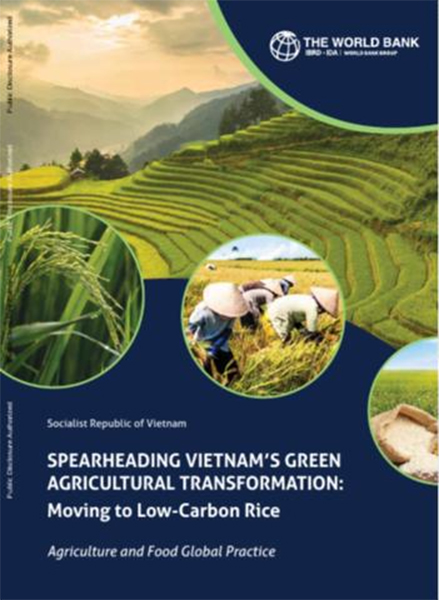
Vietnam shows us that this choice is not inevitable and that a tropical country, once food-insecure and import-dependent, can transform farming into a powerful engine of growth. Vietnam’s lesson is not about copying crops or climate. It is about how the agricultural ecosystem works.
Vietnam made a strategic decision to treat agriculture as a value chain, from farm to market, rather than as isolated plots of land. Farmers were not left to guess what to plant, when to plant, or who would buy.
Instead, the state focused on aligning production, buyers, logistics, finance, and standards, and that alignment is what Trinidad and Tobago lacks most.
If I were the Prime Minister, the first thing I would do is stop spreading agricultural resources too thin. Not every crop can be competitive. Vietnam focused on a shortlist of products where it could achieve scale, quality, and export reliability; as the Prime Minister of Trinidad and Tobago, I would do the same.
I would publish a national priority list of no more than ten crops and three protein lines, chosen for import substitution and export potential. These would come with clear targets for volume, quality, and market access, not vague promises of “food security.”
Second, I would reorganise farming around buyers first and farmers second. This may sound harsh, but it is how agriculture survives. Vietnam and Thailand use contract farming to reduce risk. Farmers know in advance who will buy, at what quality standard, and within what price range. In Trinidad and Tobago, too many farmers plant in hope rather than certainty.
As Prime Minister, I would pilot contract-based production for selected crops: hot peppers, herbs and leafy greens, anchored by supermarkets, hotels, and food processors, with transparent pricing and dispute-resolution mechanisms because farming should not be a gamble.
Third, I would invest aggressively in aggregation and logistics, not just cultivation. Vietnam understood that small farmers cannot serve modern markets unless their produce is washed, graded, packed, stored cold, and delivered on schedule. In Trinidad and Tobago, post-harvest losses and inconsistent supply allow imports to dominate by default.
If I were the Prime Minister, I would establish regional packhouse hubs, public-private partnerships equipped with cold storage, quality control, and traceability, so that farmers sell into systems, not chaos.
Fourth, I would fix agricultural finance by tying credit to contracts. Vietnam’s cooperative model allows farmers to access inputs and credit based on expected sales, not personal collateral. In Trinidad and Tobago, farmers struggle because banks treat agriculture like consumer lending.
I would create a contract-backed lending window, where financing is secured by signed off-take agreements and repaid at sale. This single reform would unlock production faster than any subsidy.
Fifth, I would move the sector decisively from “local pride” to measurable quality. Vietnam learned that global markets do not buy sentiment; they buy standards. Trinidad and Tobago needs a credible, well-resourced push toward Good Agricultural Practices, traceability, and certification.
“Local” must mean reliable, safe, and consistent. I would fund a national certification accelerator so hundreds of farms can meet buyer and export standards within two years.
Sixth, I would be honest about what technology can and cannot do. Controlled-environment farming has a role, but it is not a silver bullet. Vietnam uses technology selectively, where it improves yields, reduces losses, or increases reliability.
In Trinidad and Tobago, I would support greenhouses and hydroponics for high-value, fast-turn crops near urban centres, while ensuring energy efficiency and realistic cost controls. Technology must serve economics, not headlines.
Finally, I would change how success is measured. Vietnam did not ask whether farmers were busy; it asked whether agriculture earned foreign exchange, reduced imports, and raised incomes. I would do the same.
Ministries would be held accountable not for programmes launched, but for imports reduced, exports earned, and farmer incomes increased.
The deeper lesson from Vietnam is this: agriculture succeeds when the state does not try to farm but instead organises the conditions for farming to succeed. That means discipline, prioritisation, and a willingness to make hard choices.
If I were the Prime Minister, I would tell the nation that agriculture cannot be everything to everyone. But it can be a serious, profitable industry if we stop treating it as charity and start treating it as a strategy.
Vietnam did not become an agricultural success by accident. It learned how to make agriculture commercially viable with limited land, small farmers, climate risk, and intense import pressure. It treated agriculture as an export-and-industry system, not just “farming.”
In 2024, Vietnam’s agriculture/forestry/fishery exports hit record levels; its ministry reported earning an export value of US$62.5B
Trinidad and Tobago does not need miracles. It needs alignment. If I were the Prime Minister, that is one lesson I would apply, starting now.
