






By FRANCIS JOSEPH
A major battle is brewing before the Judicial Committee of the Privy Council in London on October 19.
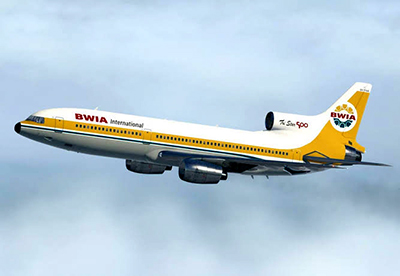
Caribbean Airlines Limited (CAL), the successor airline to BWIA, is appealing the decision of the local courts that the Communication Transport and General Workers Union is the recognized majority union for CAL workers, as was the case under BWIA.
So what is the issue?
Question – Did the Court of Appeal err in upholding the Industrial Court’s ruling that CAL is the successor to British West Indian Airways and therefore bound to recognize the union as one of its recognized majority unions under the Industrial Relations Act?
THE FACTS
CAL has been the national airline and flag carrier of Trinidad and Tobago since January 1, 2007. Prior to that, the national airline was BWIA until its closure on December 31, 2006. The union is a trade union which represented certain categories workers of BWIA. The union was a recognized majority union of BWIA pursuant to two recognition certificates issued in 1976.
In 2007, the Union applied to the Industrial Court for a declaration that the CAL was the successor of BWIA and that the recognition certificates continued to be valid following the successorship. In 2017 (ten years later), the Industrial Court ruled in favour of the union.

The Industrial Court comprised Deborah-Thomas-Felix, president, Albert Aberdeen, Patrick Rabathaly, Bindimattie Mahabir, and Heather Seale, the current president.
The court held that CAL was the successor employer of BWIA and therefore bound to recognize the union as one of its recognized majority unions under the 1976 certificates. CAL raised 16 grounds of appeal to the Court of Appeal. In summary, CAL argued that the fact findings of the Industrial Court were not supported by the evidence and that the court was wrong in law to find that CAL was the successor to BWIA because at the relevant time the collective bargaining agreement between BWIA and the union had expired and the relevant employees received severance benefits.
The Court of Appeal dismissed the appeal. It said there was no good reason to depart from the findings of fact of the Industrial Court and that the Industrial Court had not erred in law. Neither the absence of a collective bargaining agreement in force nor the payment of severance benefits were an impediment to a finding of successorship.
CAL then appealed to the Privy Council.
The appeal will be heard before Lord Sales, Lord Leggatt, Lord Burrows, Lord Stephens and Lady Simler.
THE WRITTEN SUBMISSIONS
For CAL:

In summary, the Industrial Court and, on appeal, the Court of Appeal held that because CAL was the ‘successor’ employer to BWIA under Section 48(3) of the Industrial Relations Act, it was thereby obliged to recognize the Union as its recognized majority union in respect of the bargaining units for which the certificates had been issued, and to treat and negotiate with the Union for all purposes of collective bargaining.
The Court of Appeal varied the order only to the extent of limiting the obligation to honour the terms of the registered collective agreement to those provisions relating to procedures for avoiding and settling disputes, as contemplated by Section 48(2).
It is submitted that the courts below erred in law in two respects. The order goes beyond what Section 48 empowers the Industrial Court to do. Section 48 is expressed to operate “for the purposes of section 47”: it defines who the parties to a registered collective agreement are, for the purpose of enforcing that agreement.
It confers on the Industrial Court a limited jurisdiction to determine whether a party to such an agreement has a successor or assignee who is deemed to be bound by it. While it is the function of the Industrial Court to decide whether a party is a successor to a collective agreement, the Industrial Court cannot declare that a party is the recognized majority union of any particular bargaining unit.
That is reserved exclusively to the Recognition Board under Part III of the Act, which governs the recognition and certification of trade unions. The order made in these proceedings is, in substance, a determination of recognition, which is a matter which Parliament placed outside the jurisdiction of the Industrial Court.
The relevant collective agreements had long since expired. The workers in the relevant bargaining units had their employment terminated by consent pursuant to a registered Supplemental Agreement and received severance benefits in full and final settlement of all issues arising out of the termination of their services.
For the Union:
Given that in this case, it was always the intention, and the evidence established, that CAL would take over the national airline from BWIA with the same owner, operating in the same way, and employing substantially the same employees, it ought to be not at all surprising that the Industrial Court held that CAL was the successor of BWIA. Moreover, given that in this case the only real change was in the corporate entity under the cover of which the national airline was to be operated, this is a perfect case in which to test the proposition of law which this appeal has thrown up.
Simply put, if successorship is precluded as a matter of law in this case, and if the union has lost its certified recognized majority union status in circumstances where nothing substantial has changed, then it is unlikely that, in the future, businessmen would be unable to fashion their arrangements to take over businesses in such a way as to avoid the successorship protections under the Act.
