





By Peter Green
What unfolded before the Public Accounts and Appropriations Committee (PAAC) on Monday April 14 was not just procedural confusion. It was something far more troubling. It was a moment that has the potential to erode public confidence in one of Parliament’s most important oversight mechanisms.
The much-anticipated appearance of former Health Minister Terrence Deyalsingh before the Public Accounts and Appropriations Committee should have been a routine but serious exercise in accountability. The issue at hand – questions of preferential treatment to large pharmaceutical firms to import drugs and access scarce foreign exchange – is already one of public concern. Citizens expect transparency and answers. Instead, what they got was something else entirely.
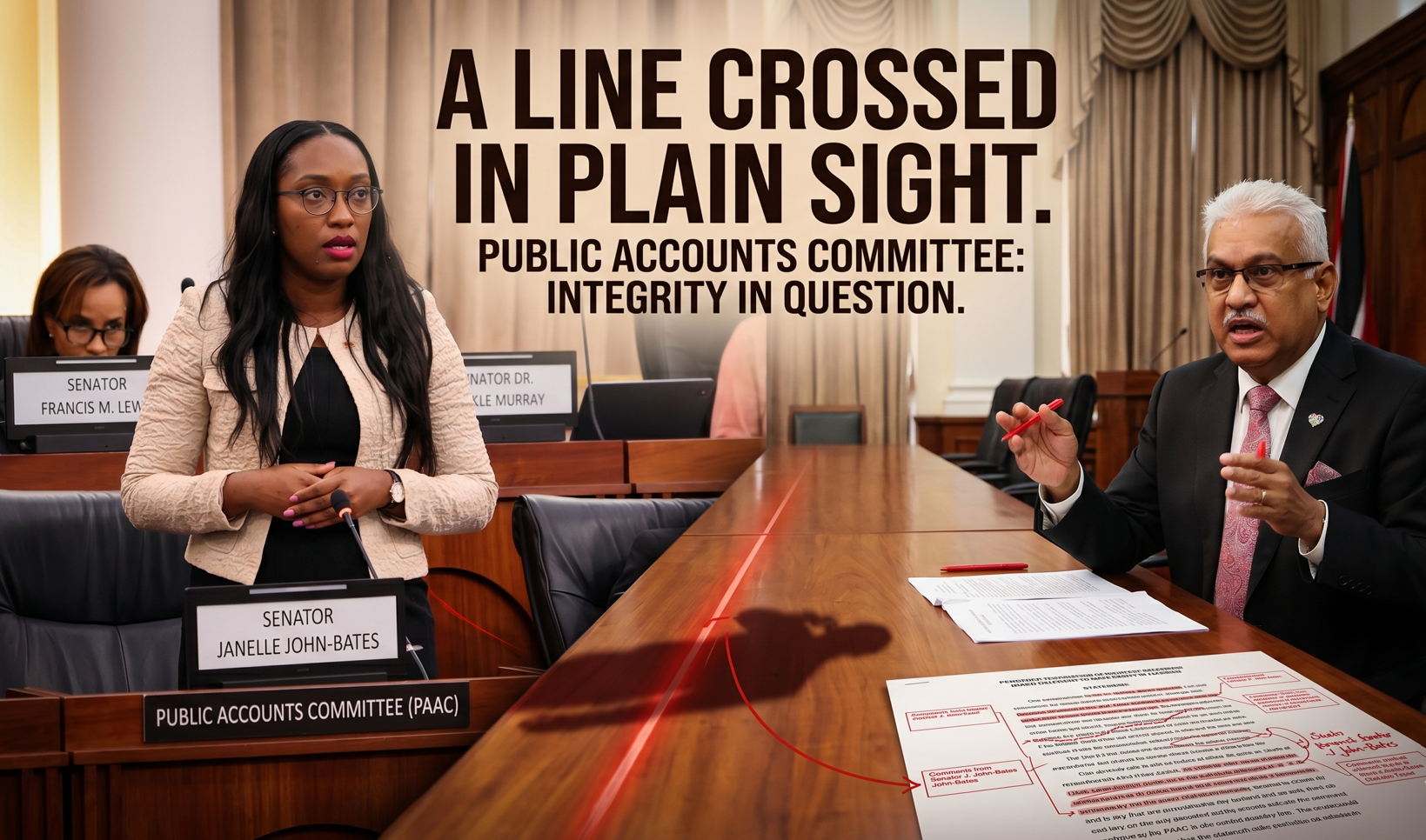
A document – submitted by Deyalsingh as his witness statement – was reportedly riddled with track changes and comments. Not just any comments, but comments suggesting involvement/advice from sitting PNM Senators, including Janelle John-Bates – a member of the very Committee conducting the inquiry – and Faris Al-Rawi, a senior parliamentarian and former Attorney General. Pause there.
This Is Not Optics – This Is Process Integrity
This is not about political sides. It is not about Government versus Opposition. It is about the integrity of parliamentary oversight.
The Public Accounts and Appropriations Committee exists to hold the Executive accountable. It is one of the few spaces where the public can expect rigorous, non-partisan scrutiny of public expenditure and administration.
If a sitting member of that Committee is assisting a witness – especially a central figure like the former Minister of Health under whose watch the preferential arrangements with large pharmaceutical companies occurred – in preparing testimony, then we are no longer dealing with an inquiry. We are dealing with a compromised process.
If all of this is true, it cannot be dismissed as poor judgment. It is a fundamental breach of the principles that govern parliamentary committees – independence, fairness and procedural integrity.
The sequence of events only deepens concern. The meeting, expected at 1:30 p.m., delayed. The chamber, the public, the country – waiting. Then, an abrupt appearance by Chairman Jagdeo Singh. An apology. A vague explanation. A four-minute session.
Adjourned. Behind closed doors. “Things had turned up.”
Indeed, they had.
And what turned up appears to have been serious enough to halt proceedings entirely and push the matter in camera. That alone tells us this was not minor. This was not administrative. This was consequential.
Does This Compromise the Inquiry?
The answer is straightforward. Yes – potentially, and significantly so.
Even if no improper intent is ultimately proven, the appearance of bias or undue influence is sufficient to undermine confidence in the process. Parliamentary committees do not operate on technical compliance alone. They rely on public trust.
Once that trust is shaken every question asked becomes suspect; every answer given becomes questionable; every conclusion reached becomes contested.
And that is the real danger here. Because this is not just about one witness or one session. It is about whether the public believes the system works.
Should There Be Resignations?
Now to the question many are asking: Should Senator Janelle John-Bates resign from the Committee? Should Faris Al-Rawi step aside? Let us approach this with clarity – not emotion.
On Senator John-Bates
If it is established that she:
- had access to Committee information
- and used her position as a member of the Committee to assist a witness
then her continued presence on the Committee becomes untenable.
At minimum, she should:
- recuse herself immediately from the inquiry, and
- allow for an independent review of her conduct
Resignation may follow – but recusal is the immediate necessity to preserve what remains of the process.
On Faris Al-Rawi
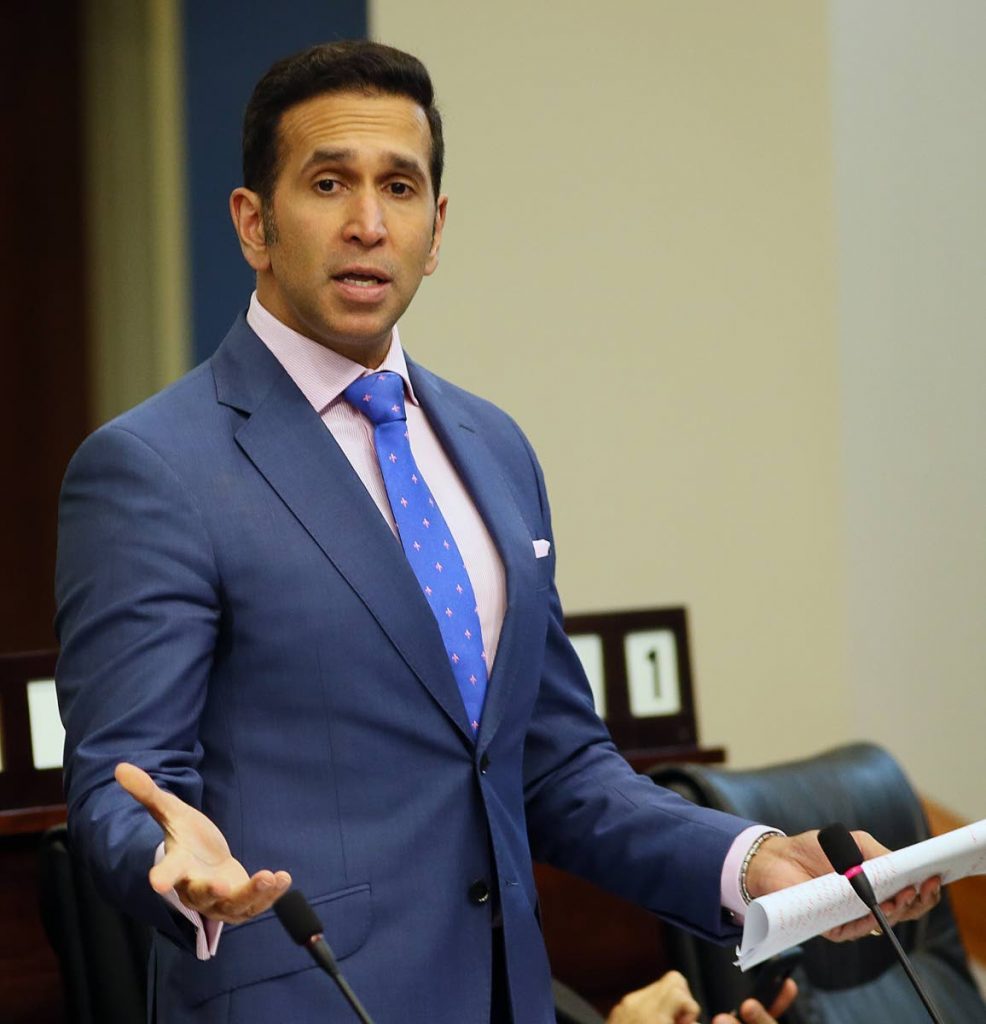
The standard here is different – but no less serious. As a former Attorney General and senior parliamentarian, he would be fully aware of:
- the boundaries of parliamentary conduct
- the sensitivity of committee proceedings
- the implications of assisting a witness in such a context
If his involvement is confirmed, then the issue becomes one of judgment and propriety at the highest level. Resignation may not be procedurally required – but accountability is. And accountability in this context means:
- a clear explanation
- full transparency
- and acceptance of responsibility where warranted and consequences, including resignation.
The Bigger Issue: Governance Culture
But let us not stop at individuals because this incident reveals something deeper. It speaks to a culture where:
- lines between roles become blurred;
- institutional boundaries are not respected;
- and worse, political loyalty risks overriding procedural integrity. This is the real issue.
Because if committees become arenas where:
- witnesses are coached by insiders;
- oversight becomes performative;
- and accountability is negotiated behind the scenes, then the entire system begins to hollow out.
What Must Happen Now
This cannot be brushed aside. Three things must happen:
1. Immediate Clarification – The Chairman must provide a clear, factual account of:
- what was discovered
- when it was discovered
- who was involved
- and why the meeting was halted
2. Recusal Where Necessary
Any member whose impartiality may reasonably be questioned must step aside from this inquiry.
3. Independent Review
This matter warrants review beyond the Committee itself – whether through parliamentary mechanisms or external oversight.
Because the Committee cannot investigate itself while under question.
Final Word
Let us be honest. The public was waiting to watch. The public watched a “regrettable but unavoidable” adjournment – to use the PAAC Chairman’s words. And the public will continue to watch what happens next. This is a moment that demands seriousness – not spin – and public accountability.
