





By Dr Jack Warner
Trinidad and Tobago has received encouraging news in its long and painful battle against crime. The Government reports a substantial reduction in murders, offering hope to a nation that has endured years of bloodshed, grieving families and communities traumatised by violence.
However, an uncomfortable question remains: If murders are declining, why are so many citizens and business owners still afraid?
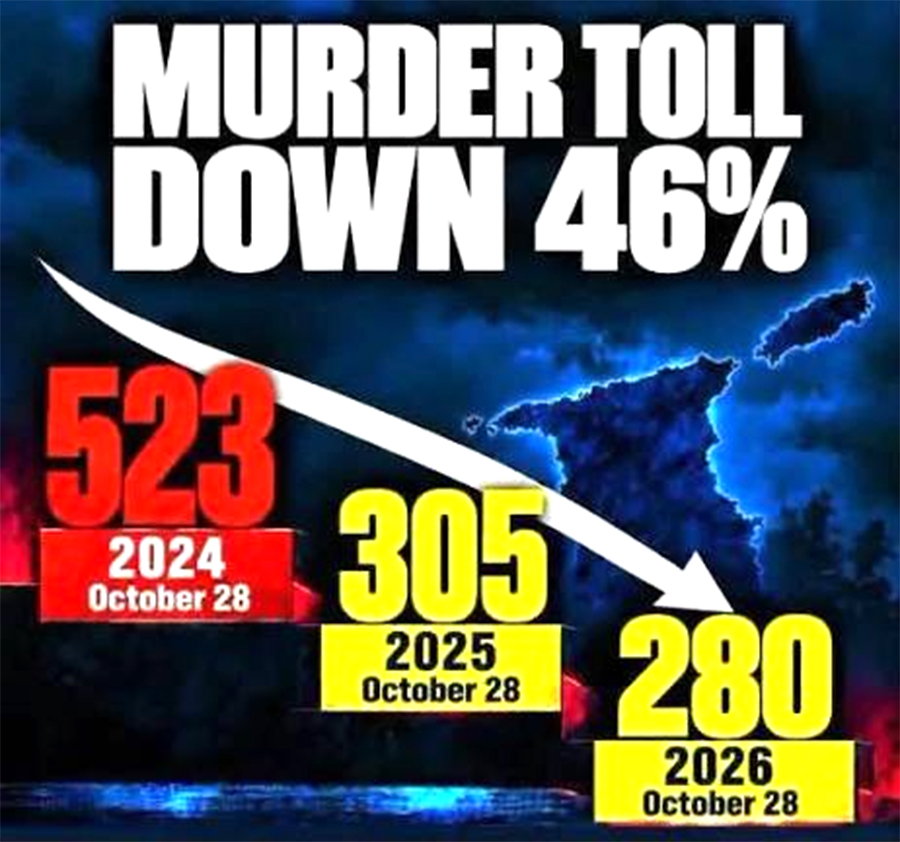
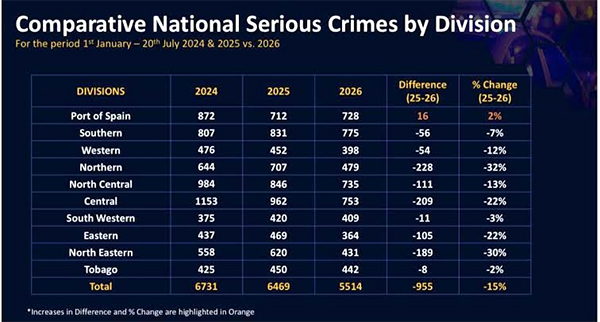
Prime Minister Kamla Persad-Bissessar recently reported that murders had fallen to approximately 280 in 2026 over the comparable period in 2024, a reduction approaching 46 per cent. Compared with 2025, however, the decline is considerably smaller.
These figures deserve recognition. Every life preserved matters. Every family spared the devastation of murder represents a victory worth celebrating. The police and other security personnel deserve acknowledgement for their efforts.
Yet we must resist the temptation to confuse an improvement in one important statistic with the achievement of comprehensive public safety.
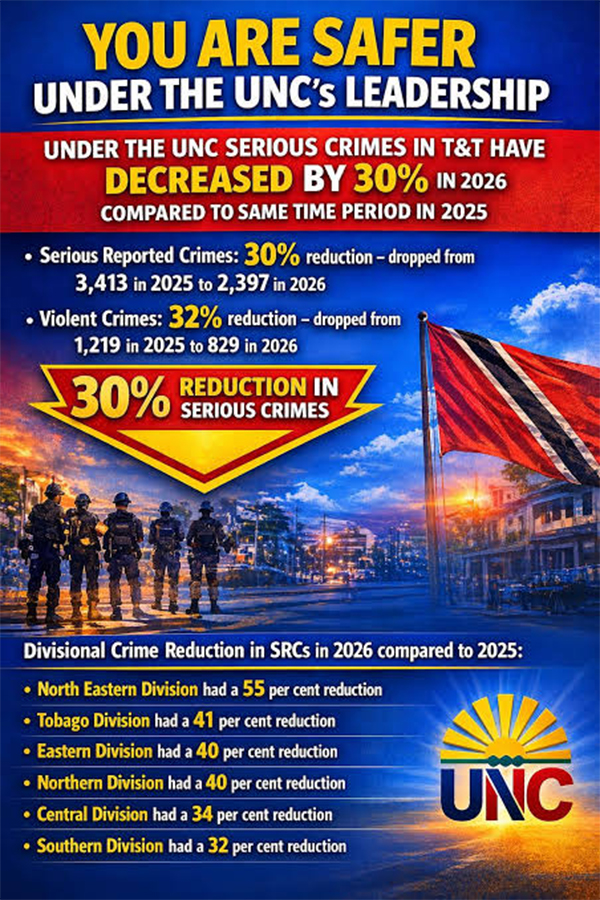
The Downtown Owners and Merchants Association (DOMA) recently warned that persistent criminal activity continues to undermine public confidence and damage commercial activity. Its concerns include robberies targeting jewellery, attacks on bank customers, assaults near shopping centres and grocery stores, and theft of copper and other valuable materials.
For a shopkeeper who repeatedly suffers burglaries, a falling murder rate offers limited reassurance. For an elderly woman afraid to withdraw her pension, the threat of robbery remains frighteningly real. For parents anxious about their children’s safety, national statistics cannot replace the confidence that their communities are secure.
This is not an argument against recognising progress. It is an argument for measuring progress more comprehensively.
Crime affects much more than its immediate victims. It influences where people shop, whether businesses remain open after dark, whether investors commit capital and whether families participate freely in community life.
When citizens avoid commercial districts for fear of becoming victims, businesses lose customers. When businesses lose revenue, employment and investment suffer. Crime therefore becomes both a national security problem and an obstacle to economic development.

The Government must confront both dimensions.
First, national crime reporting should extend beyond headline murder figures. Citizens deserve regular, independently verifiable information on robberies, burglaries, sexual offences, shootings, extortion, detection rates and successful prosecutions.
Statistics should identify geographical patterns and distinguish between reported incidents, arrests, charges and convictions. A reduction in recorded offences is encouraging, but it must be interpreted alongside reporting practices and public confidence.
Second, policing must become more visible, intelligence-driven and responsive to the crimes affecting daily life.
DOMA’s proposal for dedicated operations targeting robberies and attacks on bank customers deserves serious consideration. Coordinated surveillance, plainclothes investigations and cooperation with financial institutions could help identify repeat offenders and organised criminal networks.
Third, we must strengthen the criminal justice system. Arresting suspects is only one stage in delivering justice. Effective investigations, reliable forensic evidence, witness protection, competent prosecution and timely trials are essential to ensuring that offenders face lawful consequences.
Fourth, crime prevention must begin long before young people encounter the criminal justice system.
Communities suffering from unemployment, school disengagement, family instability and gang recruitment require sustained intervention. Mentorship, vocational training, accessible recreation, educational support and credible employment pathways should complement policing.
Such programmes must be evaluated for measurable results rather than celebrated merely because money was allocated.
Another difficult question concerns extraordinary security measures.
Trinidad and Tobago has experienced prolonged states of emergency. Supporters argue that exceptional powers helped suppress violence. Critics question their effectiveness, proportionality and implications for civil liberties.
The Government should publish a rigorous assessment of these measures, including their contribution to crime reduction, their financial costs and their consequences for constitutional rights.
Public safety and democratic accountability must reinforce each other.
Above all, the national conversation must move beyond partisan competition over statistics. Crime did not begin with the present administration, and its underlying causes cannot be resolved by political declarations alone.
Government, Opposition, police, business organisations, schools, religious institutions and communities share responsibilities, although elected leaders must provide the direction and resources.
The ultimate measure of success is not simply whether fewer people are being murdered. It is whether citizens can conduct their ordinary lives without fear.
Can a pensioner visit the bank safely? Can a business operate without repeated theft? Can a child travel to school without intimidation? Can families enjoy their neighbourhoods after sunset?
These questions should define our national security agenda.
Let us acknowledge the decline in murders without dismissing the insecurity that remains. Let us demand evidence, effective policing, prevention and justice.
Trinidad and Tobago will have made lasting progress when safer streets become an everyday experience, not merely an encouraging statistic.
Downtown Owner and Merchants Association president Gregory Aboud
