


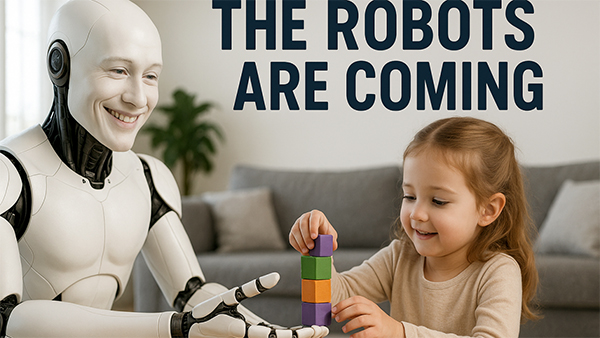



The world is moving rapidly towards integrating Artificial Intelligence (AI) and robotics into the workplace. Governments and businesses are embracing these technologies in the name of efficiency, productivity and reduced operating costs. But while everyone is celebrating technological advancement, I believe we are overlooking one very important question: What happens to the ordinary working man and woman when machines begin taking over their jobs?
Consider the cashier, bank clerk, factory worker, driver, security officer, administrative assistant and thousands of others whose livelihoods could be affected by automation. These are not necessarily highly qualified professionals, but ordinary people who depend on their monthly salaries to feed their families, pay mortgages, meet household expenses and educate their children.
Yes, there will be employment opportunities in robotics, cybersecurity, AI management, engineering and specialised technical fields. Jobs requiring empathy, compassion, human connection, complex judgement and physical dexterity will also remain important. Nurses, teachers, caregivers, electricians, plumbers, mechanics and emergency responders will continue to have valuable roles.
But here is the problem: Can every displaced worker become an engineer, computer scientist or robotics specialist?
What happens to those who cannot afford retraining, those approaching retirement and young people entering an increasingly automated job market?
We must also consider the economic consequences. Businesses may save millions by replacing workers with machines, but who will purchase their products and services if ordinary citizens no longer have steady employment or sufficient disposable income?
An economy cannot function on production alone. It requires consumers with purchasing power.
Governments must therefore begin preparing for this transformation. Retraining programmes, new employment opportunities, stronger social protection and a serious discussion about the future of working hours and wages must become national priorities.
In Trinidad and Tobago, where employment creation is already a major concern, we cannot afford to sit back and assume that technological advancement will automatically translate into better living standards for our citizens.
Technology should serve humanity, not make humanity redundant.
The question is not whether AI and robots will change the workplace. That is already happening. The real question is whether governments, employers and society are prepared for the millions of people whose livelihoods could be affected.
By 2030, will we be celebrating a technological revolution or confronting an employment crisis?
The time to address this is now, before the machines take over and the ordinary working man and woman are left wondering where their next pay cheque will come from.
Gordon Laughlin,
Westmoorings
