


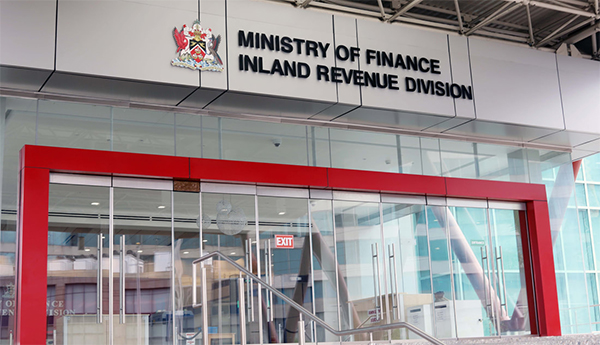


As the Minister of Finance prepares the next Budget, perhaps it is time to look at taxation differently. Instead of continuously placing more burdens on ordinary citizens, why not shift the tax burden from necessities to discretionary spending?
I would like to suggest the following:
Remove VAT from ALL food items. Food is a necessity, not a luxury. Families should not be paying VAT on what they need to put on the table.
Increase the NIS pension from $3,000 to $3,500 per month. Our pensioners contributed to this country throughout their working lives. They deserve to see some relief, particularly with the rising cost of food, medication and other necessities.
Make salaries up to $7,500 per month exempt from income tax. Give lower-income workers more money in their pockets rather than taking it away through taxation. That money will be spent locally and circulate through the economy.
But the Government must replace that revenue.
Therefore, increase taxes on new and used vehicles, particularly expensive and luxury vehicles. Those who can afford high-priced vehicles can afford to contribute more.
Increase taxes on movie houses and other discretionary entertainment.
Increase taxes on expensive construction machinery, while considering reduced taxes or exemptions for machinery directly connected to agriculture, manufacturing, productive investment and projects that create employment.
I would also examine higher taxes on luxury goods, expensive recreational items, jewellery and other non-essential imports.
At the same time, Government should reduce taxes on productive machinery, agricultural equipment, manufacturing inputs, technology and investments that can create jobs or reduce our dependence on foreign exchange.
The principle is simple:
Tax necessities less.
Tax productive investment less.
Tax ordinary salaries less.
Give pensioners more.
Tax luxury and discretionary spending more.
The Government cannot continue to look at taxation simply as a way of collecting more money. It should also ask who is paying, what they are paying for and what effect the tax has on the economy.
If we put more money into the pockets of ordinary citizens, particularly lower-income workers and pensioners, much of that money will return to businesses through increased local spending.
Minister of Finance, perhaps this is the time to think outside the traditional tax box.
Don’t keep squeezing the people who can least afford it. Shift the burden toward those who can better afford it, protect the necessities of life and encourage productive investment.
This could be an opportunity to make the Budget not simply a revenue-raising exercise, but a Budget that gives ordinary citizens some breathing room.
Yours faithfully,
Gordon Laughlin,
Westmoorings
