






A report on discussions between Trinidad and Tobago (TT) and Israel’s Agency for International Development Cooperation (MASHAV), indicated that partnerships were established in the areas of cybersecurity, agriculture, healthcare, and smart cities (Express, August 2, 2026). Attempts at developing the city of Port of Spain (POS) as a smart city, were initiated with assistance from the Inter-American Development Bank, approximately 10 years ago.
A smart city model was adopted with the objective of integrating smart urban solutions for: connectivity enhancement, transferring of e-government services; greater energy efficient utilities; improved road and traffic management; and effective safety and security measures.
A subsequent evaluation of that initiative concluded that organizational issues, including deficient leadership and management; poor stakeholder collaboration; and a lack of coordinated approaches led to limited progress in attaining a desired level of city smartness. A new approach to the planning and implementation of smart cities in TT is welcomed for promoting both city and regional development through the extension of the concept to smart village development.
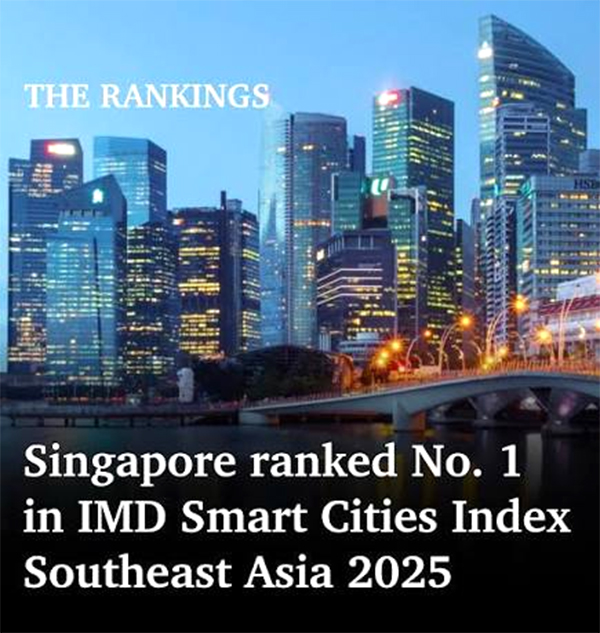
Research on the background of smart cities, was traced to the early 1990s with the description of Singapore as an “intelligent island” that adopted technological solutions for improving the quality of life of citizens. The objective in Singapore was to create a society that displayed greater innovation, competitiveness, attractiveness and resilience.
Over the past 30 years, Singapore achieved the status of a smart-city-small-island state achieving developed-country status with advanced infrastructure; zero-tolerance of corruption; an AAA credit rating; and recognition as a business-friendly country. Most of these aspirations were shared by TT officials in the POS smart city venture. Some academics continue to hold to such aspirations, pointing to the facts that Singapore is six times smaller than TT in land area, and with a full-time resident population three times larger but relatively small.
Further, shared similarities include: rapidly aging populations and reduced fertility; diverse populations (except Singapore has a dominant 75% Chinese heritage); gained independence from Britain in the 1960s; and share the inherited parliamentary political system.
The emergence of the concept of smart cities, presents challenges to city administrators for planning, managing, and governing modern cities in the digital age. Building a smart city demands adherence to a systematic process that involves: selecting a competent leader and supporting team; completing an extensive diagnostic of the city’s existing technology; assessing human resources and institutional capacities, financial assets, limitations, and challenges; and especially, building a coherent collaborative and engaging system among all stakeholders.
These are challenges TT has to be equipped to handle, if a smart city initiative can be successfully achieved. The initiative must prioritize stakeholder collaboration with tertiary institutions to create innovation, and special focus on a combination of technology, human resources, and governance.

World Congress held this week in Barcelona, Spain
This is the juncture at which the partnership with the Israeli agency MASHAV becomes relevant. According to the Jerusalem Post (May 27, 2026), development of smart cities is a top strategic interest of Israel, and the Israel Smart Cities Institute focuses on the transformation of municipalities into smart, sustainable cities through a process of needs assessment, research, strategic planning, implementation, and training (israelsmartcities.org).
This approach is applicable to the TT context with the inclusion of smart villages which concept is more appropriate to the local regions or less developed areas of countries which are more oriented to support for local entrepreneurial activities and the promotion of local tourism and cultural heritage preservation.
Research on smart villages concluded that persistent and sustainable development can be achieved in lagging regions where rural areas have limited access to innovative development processes.
Thus, the opportunity exists, in TT, for linking the smart-city and smart-village concepts through the planning and implementing of a collaborative smart region initiative by tapping the data bank of local government research acquired over years of practice in the field. Perhaps, it is now appropriate for TT to focus on bottom-up development initiatives, because the entrenched top-down approaches have failed.
Haven Allahar
Diego Martin
