





By Dr Jack Warner
As a nation, we have become remarkably proficient at measuring educational progress by what governments purchase rather than what children learn. We celebrate the distribution of laptops, the refurbishment of schools, the construction of classrooms and the announcement of multimillion-dollar education programmes. Yet the question that should determine the success of every educational investment remains unanswered: are our children becoming better readers, stronger thinkers, more capable problem-solvers, and better prepared for the demands of modern society?
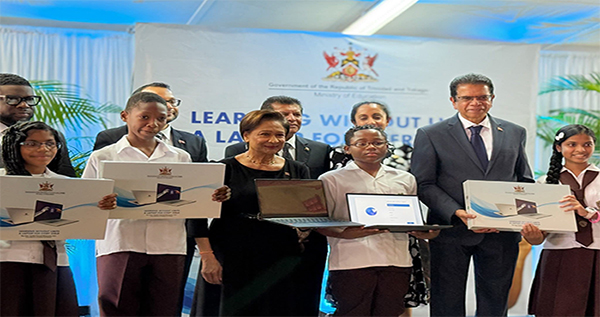
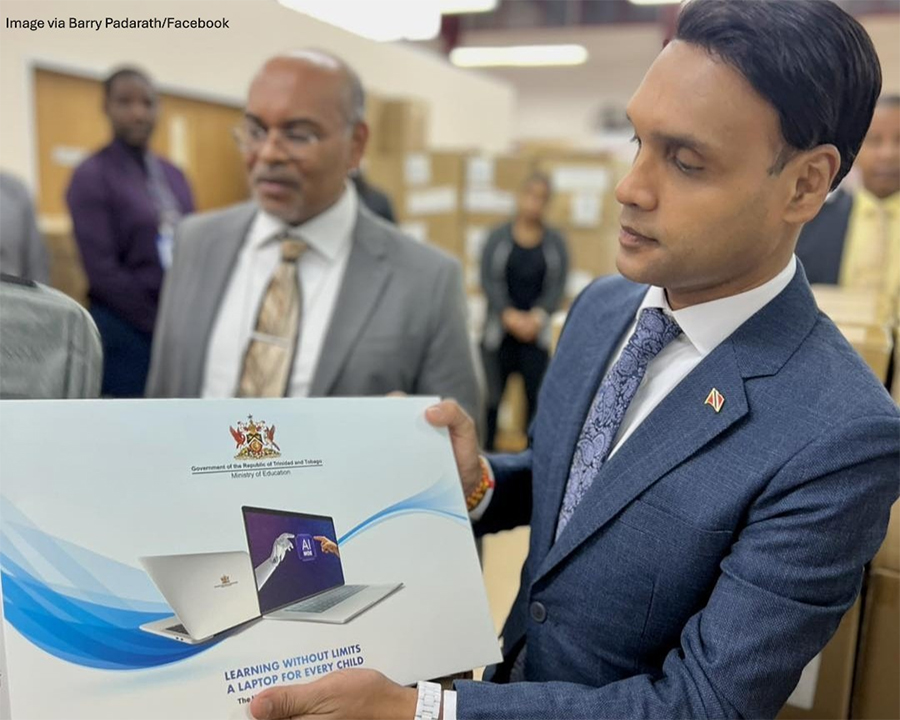
The Government’s 2027 Budget includes initiatives to improve school infrastructure and expand access to digital technology. Reports of financing arrangements for repairs at seven schools and the acquisition of about 18,000 laptops suggest an ongoing commitment to educational resources. These investments are necessary, particularly where deteriorating facilities and unequal access to technology undermine learning opportunities.
But buildings do not teach, and laptops do not automatically produce educated minds.
A classroom can be freshly painted, air-conditioned and equipped with modern computers while the teaching methods within it remain largely unchanged. Students can possess sophisticated devices yet struggle to interpret information, construct coherent arguments, solve unfamiliar problems or apply knowledge beyond examination requirements.
This is the distinction between educational expenditure and educational transformation.
For generations, Trinidad and Tobago’s education system has placed considerable emphasis on examinations, memorisation, and reproducing prescribed information. These approaches have produced many capable graduates, but they have also encouraged a narrow understanding of achievement, often mistaking examination success for intellectual development.
The modern world demands considerably more.
Artificial intelligence, automation, digital commerce, advanced manufacturing and rapidly changing labour markets require workers who can analyse problems, evaluate evidence, communicate effectively, collaborate and continuously acquire new skills. A system designed primarily to reward memorising information cannot adequately prepare every student for these realities.
The challenge is not to abandon academic rigour or examinations. It is to ensure that assessments reward understanding, reasoning, creativity and practical application rather than recall alone.
This transformation must begin with teachers.
No education reform can succeed if teachers are expected to deliver twenty-first-century learning through outdated instructional methods, inadequate professional support and overcrowded curricula. Continuous teacher development should therefore become a central national investment, not an occasional workshop or administrative requirement.
Teachers need sustained training in differentiated instruction, digital literacy, project-based learning, assessment design and the effective use of emerging technologies. They also need manageable workloads, appropriate classroom resources and professional autonomy to respond to students’ different learning needs.
Equally urgent is developing foundational literacy and numeracy.
A child who advances through primary school without strong reading comprehension or basic mathematical competence faces mounting disadvantages at every subsequent educational stage. Providing that child with a laptop may improve access to information, but it cannot substitute for systematic instruction and targeted learning support.
The Government should therefore establish measurable national benchmarks for reading, writing and mathematics, supported by early diagnostic assessments and structured interventions for students who fall behind.
Such assessments should guide support rather than become another way to label schools or punish teachers.
A coherent educational strategy must also accompany digital investment. Before distributing devices, policymakers should determine how technology will improve classroom instruction, what educational software will be provided, how teachers will be supported and how student progress will be evaluated.
Without reliable connectivity, maintenance arrangements, technical assistance and appropriate digital content, expensive equipment risks becoming underutilised or obsolete.
The economic dimension is also important.
Trinidad and Tobago cannot credibly pursue economic diversification while producing graduates whose skills are poorly aligned with emerging industries. Education policy must more deliberately connect with renewable energy, engineering, healthcare, information technology, agriculture, entrepreneurship, and technical occupations.
This does not mean reducing education to workforce preparation. Literature, history, civics, the arts and cultural education remain essential to developing thoughtful, responsible citizens. A modern education must prepare young people both to earn a living and to participate intelligently in democratic society.
The Government should publish an annual education outcomes report showing improvements in foundational learning, student attendance, teacher development, digital competence and transitions into further education or employment.
Parents and taxpayers deserve to know whether increased spending is producing measurable educational benefits.
Ultimately, we cannot judge the quality of an education system by the number of devices distributed or buildings commissioned. Those are inputs. The true outcomes are the capabilities, confidence, curiosity, and opportunities our children develop.
Trinidad and Tobago doesn’t just need better-equipped classrooms. It needs better learning within them. Until we measure educational success by what students can understand, question, create, and accomplish, we risk modernising the buildings while leaving the education itself behind.
