


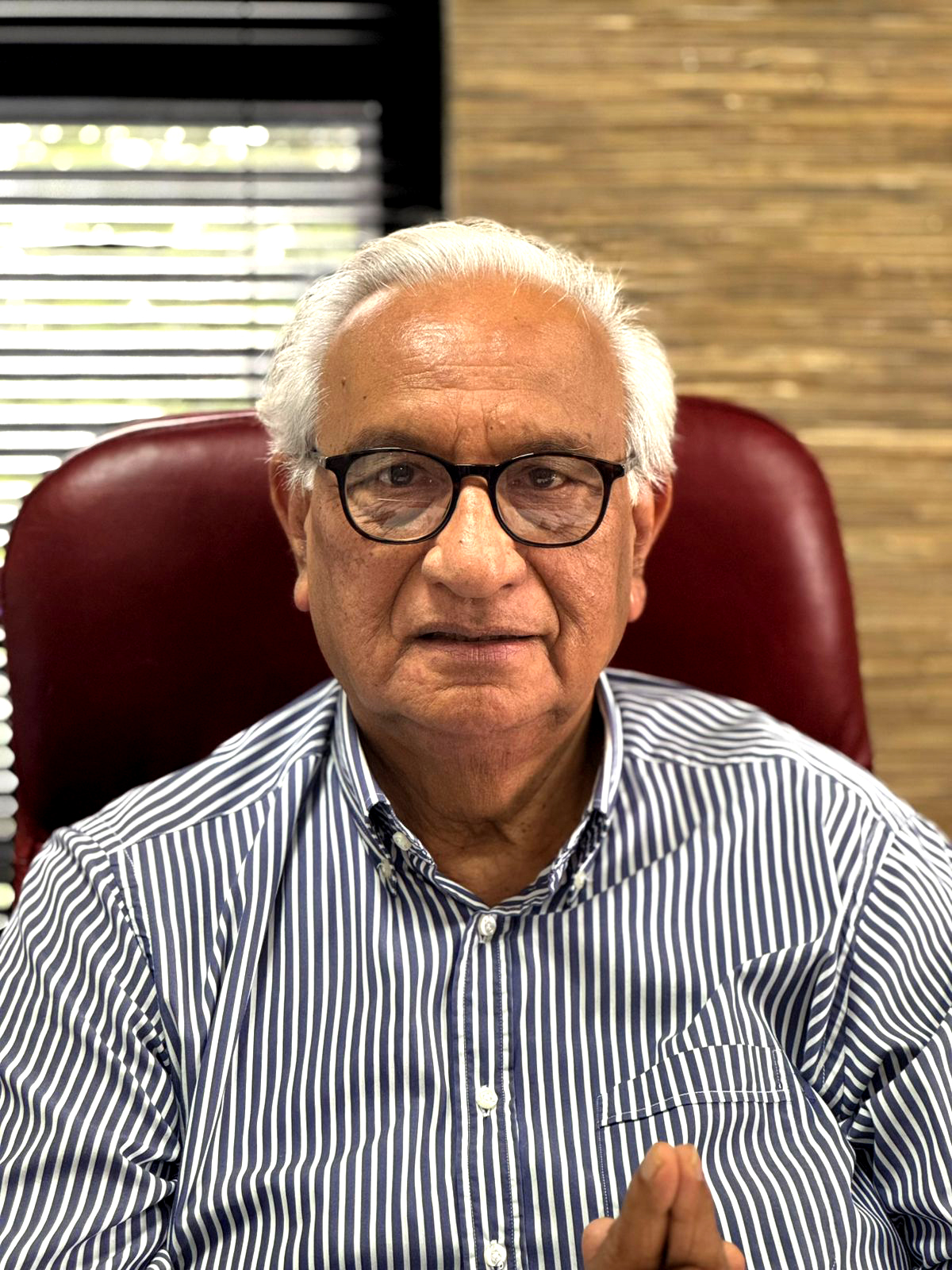



By Dr. Kumar Mahabir & Shalima Mohammed, MBP
Indian playback singer Mohammed Rafi, who was born on December 24th 1924, was remembered recently on his 100th birth anniversary. An excerpt from an article by journalist Ramjohn Ali, published in the Trinidad Guardian on May 6th 1966, recounts Mohammed Rafi’s first performance at the Globe Cinema in Trinidad on May 3rd 1966.
“From the moment he took the stage, a hush fell over the audience. Listeners were captivated by the extraordinary beauty, range and control of his voice. Rafi clearly demonstrated why he deserved to be called India’s ‘King of Song’” After leaving Trinidad on May 11th 1966, Mohammed Rafi continued his tour with a visit to Guyana where a massive crowd gathered at the country’s main airport to welcome him – the largest reception ever given to an entertainer at the time. His final stop was Suriname where he continued his tradition of singing in the native language of each country he visited.
In Paramaribo, Rafi’s rendition in Dutch of the song “Suku Suku” from the movie titled Junglee (1961) was met with great enthusiasm. Rafi returned to Trinidad on June 3rd 1966 for a special performance organized in aid of India’s Famine Relief Fund. The fund was established in Trinidad to assist those most affected by the famine in India, particularly in the states of Bihar and Uttar Pradesh, the states from which the majority of Indian indentured labourers in the Caribbean had originated.
The following are excerpts from an Indo-Caribbean Cultural Centre (ICC) Thought Leaders’ Forum (29/12/2024). The ZOOM program was chaired by Shakira Mohommed and moderated by Shalima Mohammed, both from Trinidad. There were three (3) speakers in the program. The topic was “The Impact of Mohammed Rafi songs on the Indian Diaspora.” See the unedited recording of the program: https://www.youtube.com/@dmahab/streams
MAHMOUD RAJAB (of South Africa) said: “I am an ardent admirer of Indian culture and its music. Rafi Sahib, alongside Lata Mangeshkar, is the brightest star in that firmament. And we all know that Mohammed Rafi is venerated as the greatest and the most influential singer of the Indian subcontinent. And atavistically, we all love; we all adore; we all enjoy and appreciate the great and wonderful legacy that he has left behind for all of us. Rafi Mohammed’s sudden and untimely death numbed all of us across the world.
“Like all Indians around the world, I was galvanized by the magnetic power of the singer as his words became engraved into my consciousness. And these feelings were reinforced when I heard the music of the film Baiju Bawra and listened to his rendition of “O Duniya Ke Rakhwale, Sundard Bhare Mere Nale in Raag Darbari” [O keeper of the world, listen to my pain-filled lament]. How many a hardened heart was brought to tears when he sang in the film Neel Kamal, Babul Ki Duwaye Leti Ja [Go, my child, to your husband’s home with your father’s prayers].”
DEV PERSAUD (of USA, originally from Guyana) said: “It is a truth universally that Mohammed Rafi had the most profound influence on the musical culture of Indo-Guyanese in the second half of the 20th century to the current time. His songs were, and are still prominently featured in concerts, parties, weddings, funerals and religious occasions. Mohammed Rafi was noteworthy for his versatility and voice range. Mohammed Rafi’s impact was undoubtedly incredible.
“Recognizing Rafi’s tremendous potential, Naushad the composer, had a great impact on the budding singer’s career. He later referred to Rafi as his adopted son. It was Naushad who gave Rafi his first solo song assignment, “Tera Khilona Toota Balak” [“Your Toy Broke, Boy”] in Anmol Ghadi (1946; “Priceless Moment”), and later the song “Is Duniya Mein Ae Dilwalo” [“O Brave-Hearted in this World”] in Dillagi (1949; “The Jest”), which proved to be a breakthrough in his singing career.”
GALIED ALIAHMAD (of the Netherlands) said: “Mohammed Rafi was born in a village in Kolkata but his family moved to Lahore when he was a boy. Rafi’s love for music began when a Sufi Fakir visited their village, and his singing deeply moved him. He was captivated by Fakir’s soulful singing and would often imitate him and follow him. The Fakir sat under a tree and he saw Rafi and asked him: ‘Why do you keep following me?’ Rafi said, “Because I love the way you sing.” The Fakir then asked Rafi sahib: “Can you sing?” And then Rafi began to sing and the Fakir was very impressed with the voice of Rafi. The Fakir then gave him a dua (prayer) and the prayer means that you are going to be a big man in the future. And his prayer came true. He became a maestro in the Bollywood film industry, and not only in the Bollywood film Industry, Mumbai and India, but all over the world.”
802 words.
Correspondence – Dr Kumar Mahabir, Trinidad and Tobago, Caribbean. WhatsApp +1 868 756 4961. E-mail: dmahabir@gmail.com
