





By Joey Bartlett
More than six weeks after acting president Delcy Rodríguez declared Prime Minister Kamla Persad-Bissessar persona grata, questions remain. No formal withdrawal of the National Assembly’s October 2025 resolution has been verified.
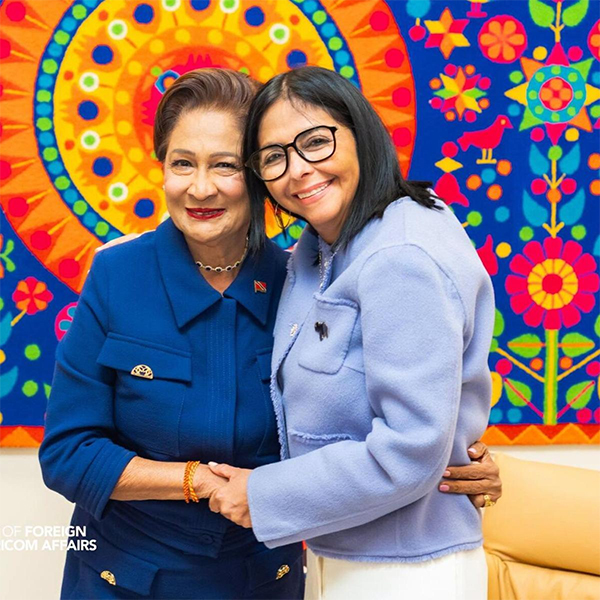
The diplomatic breakthrough came on September 23 in New York. Persad-Bissessar met Rodríguez at Venezuela’s Permanent Mission to the United Nations. The meeting took place during the 81st United Nations General Assembly.
Both leaders reaffirmed their commitment to bilateral cooperation and good neighbourly relations. Rodríguez confirmed Persad-Bissessar was persona grata in Venezuela. They also agreed to arrange official visits to Caracas and Port of Spain.
However, the meeting did not announce a withdrawal of the National Assembly’s earlier declaration.
The diplomatic thaw followed months of strained relations between both countries. On October 28, 2025, Venezuela’s National Assembly unanimously declared Persad-Bissessar persona non grata. The declaration was published in Official Gazette No. 43,243, dated the same day. Since then, more than 150 gazetted items have been published.
The decision followed tensions over Trinidad and Tobago’s security cooperation with the United States military. The resolution accused Persad-Bissessar of supporting actions threatening Venezuela’s sovereignty and national security.
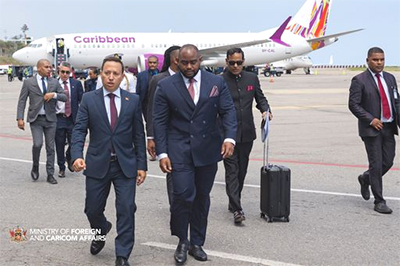
Venezuelan Government officials at the Simon Bolivar airporrt
However, diplomatic groundwork for improved relations began earlier. This included a period of humanitarian cooperation following earthquakes that struck Venezuela on June 24, 2026. Two quakes, measuring 7.2 and 7.5, hit 39 seconds apart.
Trinidad and Tobago joined CARICOM relief efforts following the earthquakes. On July 8, Rodríguez wrote to Persad-Bissessar, thanking her for the country’s assistance. Rodríguez also publicly thanked CARICOM, including Trinidad and Tobago, on July 14.
Further efforts to improve relations followed on September 3, when Foreign Affairs Minister Sean Sobers visited Caracas. He held discussions with Venezuelan officials on restoring bilateral cooperation. Both governments outlined a working agenda covering several areas of mutual interest.
These included trade, energy, agriculture, security, environmental protection and cultural cooperation. The governments also identified opportunities for developing their natural resources.
The rapprochement has since extended into commercial engagement. On October 27, Sobers addressed a Venezuela business roundtable in Port of Spain. The event included a visiting delegation from Venezuela’s Sucre State.
Representatives explored opportunities in manufacturing, fisheries, agriculture, tourism and energy.
Despite these developments, the status of the original parliamentary declaration remains unresolved. Rodríguez’s confirmation of Persad-Bissessar’s diplomatic standing does not establish legislative rescission. No separate rescinding agreement or voting record has been independently verified.
