






By Dr Jack Warner
For centuries, the Caribbean helped generate enormous wealth for European empires through the exploitation of enslaved Africans. Plantations produced sugar, rum, and other commodities that enriched merchants, financial institutions, and governments across the Atlantic. The people whose labour created that wealth received neither wages nor compensation for their suffering.
Today, the question of reparations has returned to the centre of international diplomacy, giving Caribbean governments an opportunity to turn a longstanding demand for historical justice into a programme for economic and social development.
The latest controversy follows remarks by British Prime Minister Andy Burnham, who has expressed regret for Britain’s role in transatlantic slavery and indicated a willingness to consider a formal apology. However, he has rejected financial reparations, arguing that present generations should not be held personally responsible for historical wrongdoing.
CARICOM has welcomed the prospect of meaningful dialogue while firmly rejecting the suggestion that reparations should be excluded. The distinction is important.
An apology acknowledges wrongdoing. Reparatory justice seeks to address its enduring consequences.
Caribbean leaders must now demonstrate that the pursuit of reparations is not simply an emotional appeal to history but a serious, evidence-based development agenda. The claim’s moral foundation is substantial.
Slavery was not merely the misconduct of individual plantation owners. Laws supported it, state institutions protected it, and international commercial systems embedded it.
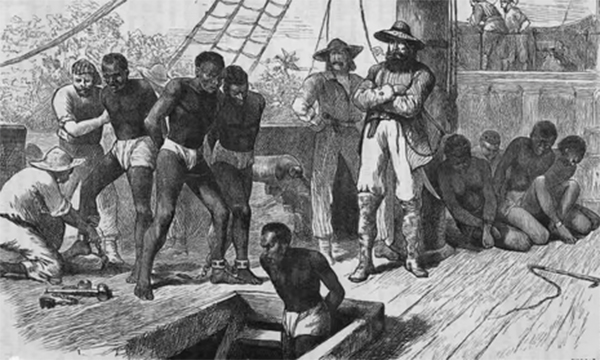
of enslaved Africans. Plantations produced sugar, rum, and other commodities that enriched
merchants, financial institutions, and governments across the Atlantic
When Britain abolished slavery in its colonies during the nineteenth century, it compensated slave owners for the loss of what the law had treated as their property. The formerly enslaved received no comparable compensation for generations of unpaid labour and deprivation. That historical injustice cannot be erased by expressions of sorrow.
Nevertheless, legitimate questions remain about how responsibility should be assessed across generations, how reparations should be calculated, and how any resulting resources should be distributed.
These questions require serious negotiation, not slogans.
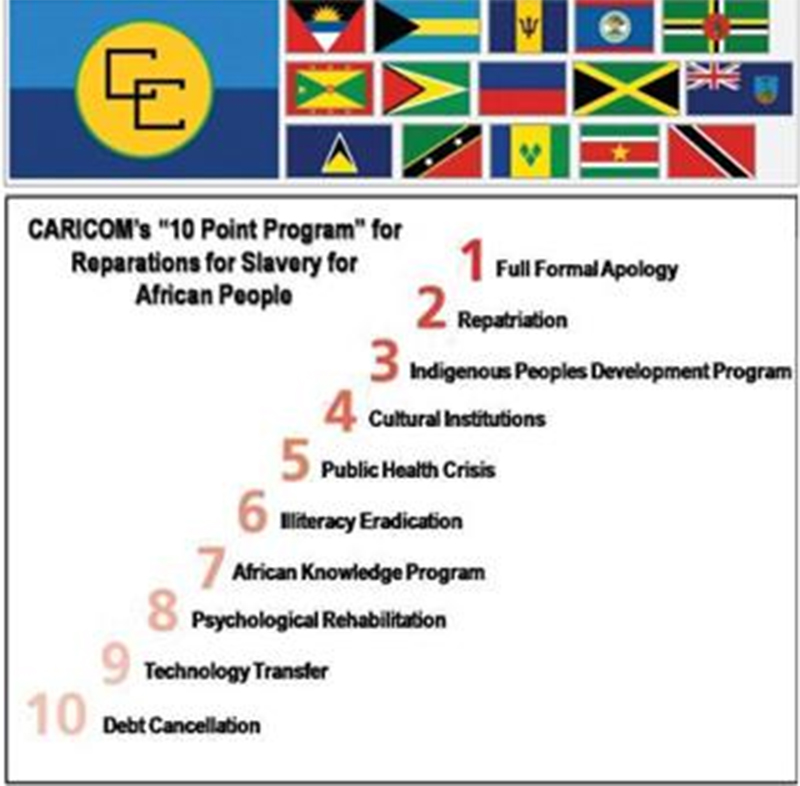
CARICOM’s Ten-Point Plan for Reparatory Justice provides a framework that extends beyond direct monetary compensation.
It includes education, public health, cultural restoration, technology transfer, psychological rehabilitation, debt relief and economic development. This broader approach deserves greater public attention.
Consider education. Caribbean societies continue to confront inequalities in educational opportunity, technological access and advanced research capacity. Reparatory partnerships could support scholarships, technical institutions, digital infrastructure and university research programmes.
Such investments would equip future generations with skills necessary to compete internationally.
Public health offers another opportunity.
The region faces considerable challenges involving chronic diseases, specialist medical services, healthcare infrastructure and the migration of trained professionals. Long-term partnerships supporting hospitals, medical research, professional training and preventive healthcare could deliver measurable improvements.
Economic diversification must also be central.
Caribbean economies remain vulnerable to external shocks, climate-related disasters and fluctuations in tourism, commodity prices and international trade.
Reparatory development programmes could strengthen agricultural production, renewable energy, manufacturing, scientific innovation and small-business financing. These investments would create productive capacity rather than merely finance consumption.
The British Government has proposed examining debt restructuring for poorer Commonwealth countries. This deserves consideration, but it should not replace the wider reparations discussion.
Many Caribbean states are classified as middle- or high-income countries despite their vulnerability to hurricanes, flooding and other economic disruptions. Any debt initiative that ignores this vulnerability risks excluding countries with genuine development needs.
Caribbean governments also have a responsibility. If reparations are eventually secured, citizens must be assured that the benefits will not disappear into poorly managed state programmes, political patronage or administrative waste.
CARICOM should therefore begin designing transparent governance arrangements before reaching agreements. An independently supervised regional development mechanism, subject to professional audits and public reporting, could help direct resources toward clearly defined priorities.
Projects should have measurable targets, including improved educational attainment, stronger healthcare outcomes, increased productive investment and expanded employment opportunities.
The involvement of civil society, universities, historians, economists and community organisations would strengthen legitimacy.
Reparations must also address the experiences of Indigenous peoples and the wider consequences of colonial exploitation. The Caribbean’s history cannot be reduced to a single narrative when multiple communities experienced displacement, coercion and structural inequality. Equally important, the region should avoid presenting reparations as a replacement for domestic responsibility.
Historical injustice helps explain aspects of our development challenges, but it does not excuse corruption, ineffective governance, poor economic planning or the failure to invest wisely in our own people. We must pursue justice internationally while demanding accountability at home.
For Trinidad and Tobago, this debate should be especially relevant.
Our economic future depends on diversification, stronger education, improved healthcare, technological development and the creation of sustainable employment. A carefully structured reparations programme could complement these national priorities.
The Caribbean should neither abandon its demand for historical justice nor allow that demand to become trapped in endless diplomatic confrontation. The objective must be constructive engagement that produces tangible results.
A formal apology would represent an important acknowledgment of history. But the greater achievement would be a negotiated programme that helps Caribbean societies overcome inherited disadvantages and build stronger economic foundations.
Reparations should not be measured only by what Britain agrees to acknowledge or pay. They should also be measured by what the Caribbean can build for generations yet to come. History cannot be rewritten, but its consequences can be confronted, and the future can be changed.
