





Trinidad and Tobago appears to be approaching a crossroads, yet I question whether our national development plans are keeping pace with the changing world of work.
Businesses are laying off employees, restructuring their operations and increasingly turning to Artificial Intelligence (AI) to perform tasks previously handled by human workers. AI assistants can now manage information, process instructions, organise schedules and perform administrative duties with increasing efficiency.
This is not some distant prediction. It is happening now.
Locally, we have witnessed retrenchments across several industries. Government figures disclosed 234 retrenchments in the private sector between January and July 2026 alone.
At the same time, we have CAL employees, teachers, nurses and Port Authority workers seeking outstanding wages and back pay. These are people who have given their services to the country and should not have to continually fight for money they have earned.
Then we hear about expanding our national security forces and recruiting thousands of additional personnel.
My question is simple: Where is the national employment strategy?
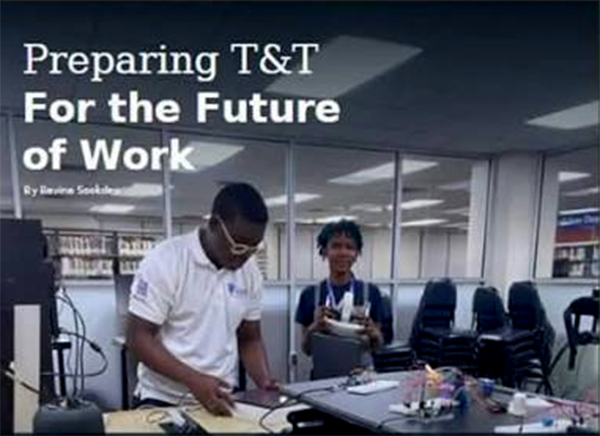
Are we preparing our young people for an economy increasingly driven by AI, robotics and automation? Are we investing sufficiently in technical education, digital skills, entrepreneurship and new industries?
We cannot continue to measure national development by how many people Government can absorb into the public service.
National security is important, but economic security is equally important. People need sustainable employment, businesses need confidence to expand, and workers need assurance that technological advancement will not leave them behind.
I am calling on Government to present a comprehensive five-to-ten-year employment and economic transition strategy.
It should address:
- The impact of AI and automation on existing jobs.
- Retraining and reskilling displaced workers.
- Creating private-sector employment opportunities.
- Settling outstanding wages and back pay.
- Preparing our education system for the jobs of tomorrow.
We cannot afford to have one part of the country losing jobs while another part of Government plans to expand its workforce without a clearly communicated national employment strategy.
The question is not how many people we can employ today, but how many people will have meaningful employment tomorrow.
Trinidad and Tobago must plan for the future, because AI is not waiting for us to catch up.
Gordon Laughlin,
Westmoorings
