


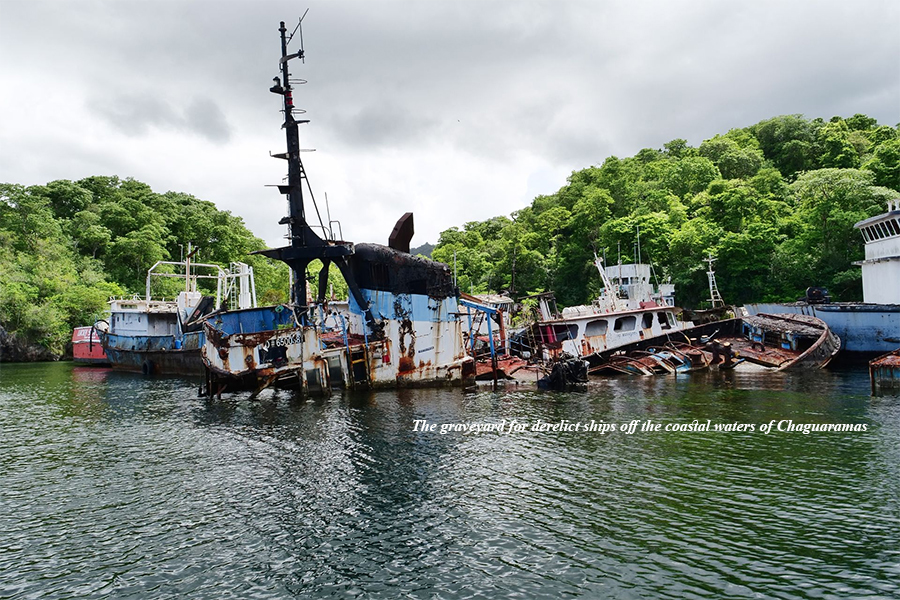



Why are we constantly looking elsewhere for economic opportunities when some of the biggest possibilities may be sitting right on our own coastline?
I am proposing that Trinidad and Tobago seriously pursue the establishment of a marine salvage, shipbreaking and ship-recycling industry along our south-western peninsula, particularly around Cedros, Icacos and Columbus Bay.
This is not a far-fetched idea. It is an opportunity to create an entirely new industrial sector, attract international investors and generate desperately needed foreign exchange.
There are thousands of ageing vessels operating throughout the world’s oceans. Many eventually reach the end of their commercial lives and require dismantling. India and other Asian countries have established themselves in this business, earning substantial revenues from recovered steel, copper, machinery, engines and other valuable materials.
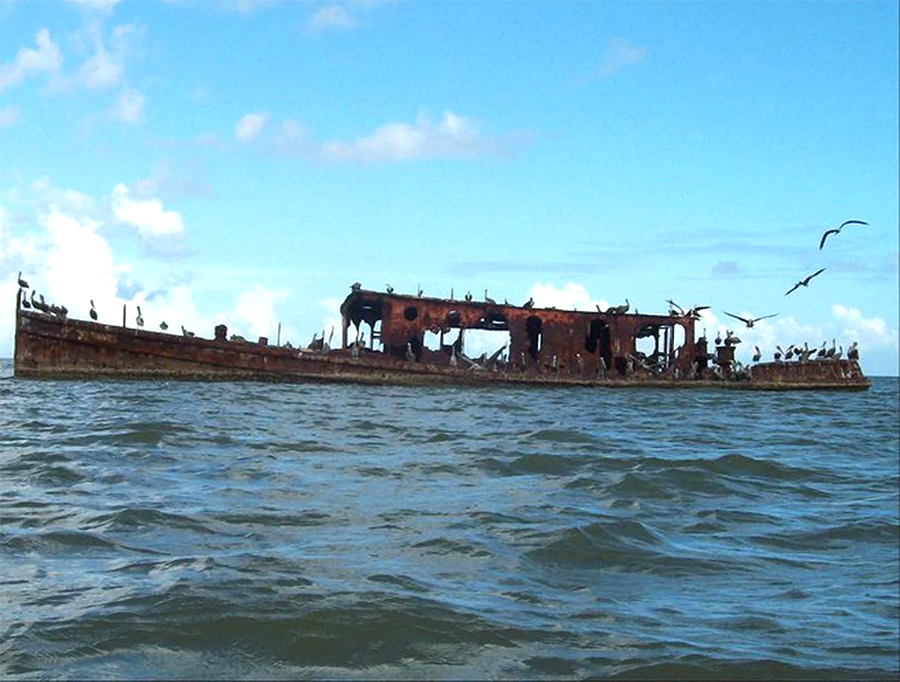
Why must we assume that this business belongs exclusively to them?
Our geographical position in the southern Caribbean gives us an opportunity to compete for vessels from the Caribbean, South America and neighbouring shipping routes. For some operators, transporting an ageing vessel to India may be uneconomical when a closer regional alternative could be available.
The economic benefits could be enormous. Apart from foreign exchange earned through salvage contracts and recovered materials, this industry could generate thousands of direct and indirect jobs for welders, engineers, divers, mechanics, crane operators, transport operators, security personnel and many other trades.
More importantly, it could transform the economic fortunes of communities in Cedros, Icacos and surrounding areas, bringing investment, infrastructure, commercial activity and employment to a part of Trinidad that deserves far greater economic attention.
And why stop at shipbreaking?
We could eventually develop marine engineering, offshore equipment recovery, ship repairs, wreck removal, metal recycling and other maritime services.
Naturally, this must be developed under strict environmental safeguards, with proper coastal engineering, pollution controls and internationally recognised ship-recycling standards. We must not sacrifice our coastline or marine environment in pursuit of economic development.
I challenge the Government to invite international marine salvage and ship-recycling investors to Trinidad and Tobago, commission a proper feasibility study and identify suitable locations along our south-western coastline.
We have spent far too many years watching industries disappear, businesses close and foreign exchange become increasingly difficult to obtain.
How much longer must we remain spectators while other countries build wealth from industries that we could potentially develop ourselves?
Cedros, Icacos and Columbus Bay should not be regarded merely as remote coastal communities. They could become the foundation of a major new maritime industrial hub for the Caribbean.
Trinidad and Tobago needs industries that earn foreign exchange, create sustainable employment and reduce our dependence on oil and gas.
Let us stop talking about diversification and start identifying, developing and pursuing opportunities that can actually put foreign exchange into our economy.
The ships are out there. The market exists. The opportunity deserves our attention.
The question is whether we have the vision and determination to go after it.
Gordon Laughlin,
Westmoorings
