






We ask ourselves why there is growing scepticism surrounding the actions of government. Is it because citizens are becoming increasingly disillusioned with the exercise of political power, or because the institutions established to safeguard our democracy appear insufficiently assertive?
The Constitution of Trinidad and Tobago provides checks and balances intended to prevent the abuse of executive authority. These safeguards become particularly important when a government commands a comfortable parliamentary majority and encounters little effective resistance to its legislative agenda.
A parliamentary majority confers the authority to govern; it does not confer an unrestricted licence to rule.
Many may counter that the Office of the President is largely ceremonial and that our interpretation extends beyond the constitutional functions of the President. However, we maintain that the office carries considerable moral authority and constitutional responsibility.
The President, by virtue of the oath of office, undertakes to preserve and defend the Constitution and the law, discharge the functions of the office impartially and devote herself to the service and well-being of the people.
Every President should aspire to leave an enduring legacy that contributes positively to national development. Such a legacy must amount to more than ceremonial appearances, diplomatic engagements and the conferral of national awards, important though these functions may be.
Section 61(2) of the Constitution expressly contemplates the granting or withholding of presidential assent to legislation. However, this provision must be read alongside Section 80, which generally requires the President to act on Cabinet or ministerial advice, subject to constitutional and statutory exceptions.
Whether, and under what exceptional circumstances, a President may independently withhold assent deserves serious constitutional examination.
Nevertheless, constitutional limitations should not prevent the exercise of moral leadership. There is a fundamental difference between political interference and constitutional vigilance.

The proposed scrap-metal export ban
Consider the announcement by Prime Minister Kamla Persad-Bissessar that the Government intends to impose a total ban on the export of scrap iron, copper and brass by December 31, 2026.
The Government has justified its decision as necessary to curb theft and vandalism affecting public and private infrastructure. Few reasonable citizens would dispute the need to address such criminal activities. However, the Trinidad and Tobago Scrap Iron Dealers Association has objected to the proposed ban.
Should legitimate business operators and their employees bear the consequences of criminal activities perpetrated by others? Have all reasonable regulatory and enforcement alternatives been exhausted? Has sufficient consideration been given to the economic and social consequences?
The Government has a responsibility to protect public infrastructure, but it must also ensure that its policies are proportionate, equitable and informed by meaningful consultation.
Should the ban require new primary legislation, the question of presidential assent may arise. If implemented through ministerial orders under existing legislation, the constitutional process would be different.
Whatever mechanism is employed, the broader question remains: what institutional safeguards exist to ensure adequate scrutiny of executive decisions?
Section 81 of the Constitution entitles the President to request information from the Prime Minister concerning matters of government. There is, therefore, scope for the President to seek clarification and exercise the influence associated with the office.
A President need not enter the arena of partisan politics to demonstrate concern for societal justice.
The dangers of unchecked power
In his 1891 essay, The Soul of Man Under Socialism, Oscar Wilde described democracy as:
“The bludgeoning of the people by the people for the people.”
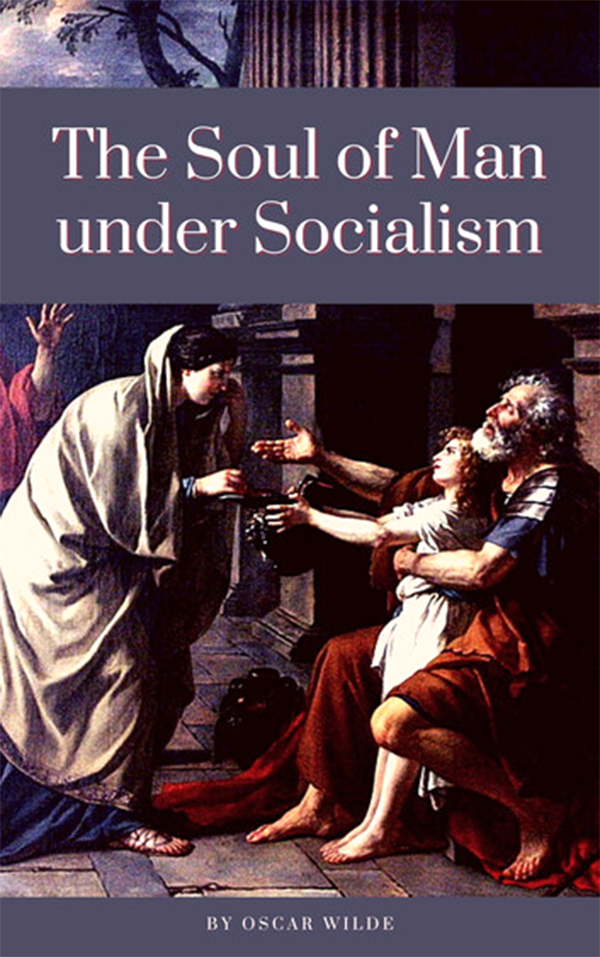
More than a century later, his observation invites reflection. Are citizens becoming victims of the very democratic institutions established to protect their interests? Or, to borrow from our calypso tradition, do we simply “like it so”?
Democracy cannot be reduced to the casting of ballots every five years. It demands continuous public engagement, institutional accountability, transparency and respect for divergent opinions.
Independent media, opposition parties, trade unions, interest groups and non-governmental organisations have important roles in holding governments accountable.
Perhaps it would be useful to revisit the works of some of our distinguished intellectuals and literary figures whose writings illuminate the dangers of concentrated political power.
V.S. Naipaul, in The Mimic Men and A Bend in the River, explores the complexities of postcolonial societies, political instability and authoritarian leadership. His writings invite us to consider whether newly independent nations sometimes reproduce the very structures of domination from which they sought liberation.
C.L.R. James, the distinguished Trinidadian historian and political theorist, challenged both colonial autocracy and authoritarian state bureaucracy. His writings, including The Black Jacobins and Modern Politics, emphasise popular participation and the capacity of ordinary citizens to influence their political destiny.
Dr Eric Williams, our first Prime Minister and an internationally respected historian, was a formidable critic of colonial domination. Yet his political legacy presents an interesting paradox. His declaration that “Massa Day Done” existed alongside a political system that critics have characterised as highly centralised.
Earl Lovelace, through novels such as The Dragon Can’t Dance and Salt, examines the struggles of ordinary people against social marginalisation and entrenched hierarchies, emphasising cultural resistance, dignity and individual agency.
These intellectual contributions compel us to examine the relationship between political authority and the people in whose name that authority is exercised.
Have we truly emancipated ourselves from the culture of unquestioning obedience, or have we merely transferred our allegiance from colonial masters to domestic political establishments?
Silence is not neutrality
Being quiet, docile or perpetually sitting on the fence achieves little in the advancement of democratic governance.
There is, admittedly, a distinction between being passive and being strategic. Exercising restraint while gathering facts and determining the appropriate moment to intervene may demonstrate wisdom. Remaining silent out of fear, political allegiance, personal convenience or indifference is another matter altogether.
Citizens must understand that questioning government is not an act of disloyalty to the nation. Neither is disagreement with a political leader an act of hostility towards the political party that leader represents.
Indeed, constructive dissent is among the highest expressions of responsible citizenship.
Institutional independence is demonstrated not merely by constitutional provisions but by the integrity, courage and impartiality with which those entrusted with authority discharge their responsibilities.
The President must respect constitutional boundaries. Parliament must exercise meaningful scrutiny. The Judiciary must remain independent. The media must interrogate those who exercise power. Civil society must remain vigilant.
And the citizenry must abandon the notion that its democratic responsibilities end on election day.
No political party should command such unquestioning loyalty that its supporters become incapable of recognising injustice, opposing unreasonable policies or challenging questionable decisions.
The strength of a democracy is measured not by the power of its government but by the effectiveness of the institutions and citizens capable of holding that government accountable.
Governments come and go. Political leaders rise and fall. The institutions of the Republic, however, must endure.
If those entrusted with safeguarding our democracy become indifferent, and those entitled to demand accountability become silent, we cannot absolve ourselves of responsibility for the consequences.
It is, therefore, incumbent upon every citizen, irrespective of political allegiance, to consider the direction in which our nation is travelling.
Quo vadis, Trinidad and Tobago?
