





The Editor,
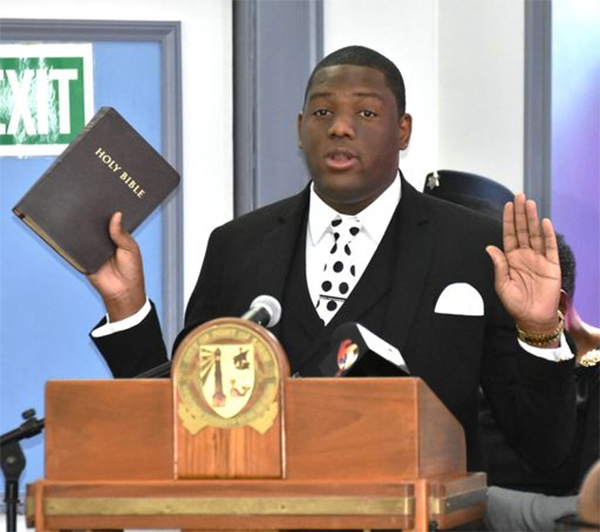
The recent attempt by Kareem Marcelle to justify his controversial remarks warrants careful scrutiny, particularly given the fact that the United National Congress has been labeled an Indo party albeit for cheap political gains.
For decades, the United National Congress (UNC) has been labelled by many as an “Indian party.” This characterization did not emerge solely from its political opponents but has often been reinforced by elements within the People’s National Movement (PNM) itself. It will be very disingenuous for anyone to now feign surprise at politically charged racist remarks directed at the UNC while ignoring the role that successive political actors have played in fostering ethnic political divide. We have not forgotten the statement by a former PNM minister that “the only good Indian is a PNM Indian”, a remark that remains a stain on our political history.
Mr. Marcelle has since claimed that his comments were directed at government policies which he believes are anti-African. If this is indeed the case, then he has an obligation to identify those specific policies and present evidence to support his allegations. To date, no such examples have been provided. In the absence of facts and policy analysis, his statements amount to little more than inflammatory rhetoric. Such remarks carry the dangerous potential to incite resentment, deepen racial divisions, and undermine national unity.
Equally troubling is the context in which these comments were made. Mr. Marcelle chose to deliver his message in Laventille, a community predominantly populated by people of African descent. This fact cannot be overlooked, when considering the targeted audience. Political leaders must understand that words spoken in such settings carry weight and can easily be interpreted as an appeal to racial sentiment rather than reasoned political discourse.
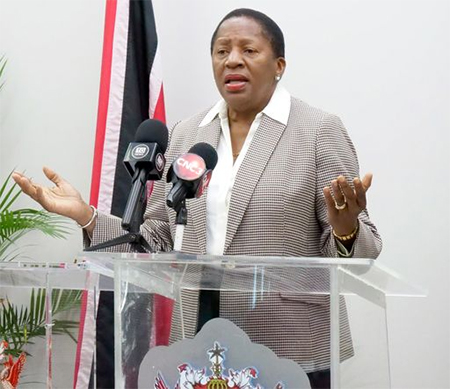
Furthermore, Opposition Leader Pennelope Beckles’ attempt to reaffirm the PNM’s commitment to interracial solidarity rings hollow if it is not accompanied by a clear and unequivocal condemnation of Mr. Marcelle’s remarks. One cannot credibly champion national unity while remaining silent on statements that many citizens reasonably perceive as racially divisive. Leadership demands consistency, which is very much lacking in the leadership style of the opposition leader.
As a young and aspiring political leader, Kareem Marcelle would do well to learn that statesmanship requires more than passionate speeches and partisan loyalty. It demands restraint, responsibility, and a commitment to elevating public discourse. True leadership seeks to unite citizens around solutions to common challenges rather than deepen existing fault lines for political gain.
At a time when Trinidad and Tobago faces serious challenges, the nation deserves leaders who build bridges, not barriers.
L. De Gannes
Arima
