





By STEVON JAGGASAR
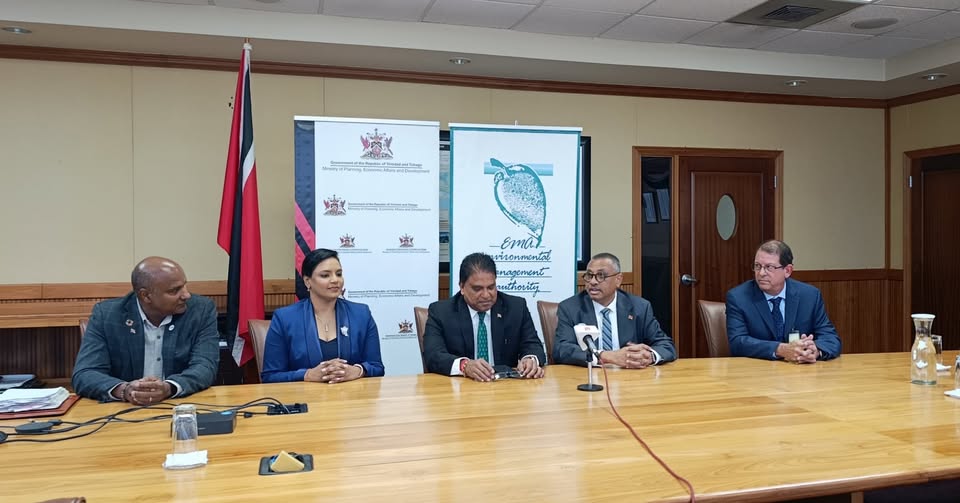
Clearance has been given to conduct three-dimensional surveys. On December 28th, the Environmental Management Authority (EMA) granted ExxonMobil the necessary approvals to proceed with ultra-deep-water exploration under the Energy Ministry’s TTUD-1 initiative.
With permission now secured to conduct three-dimensional seismic surveys, Trinidad and Tobago has taken a decisive and long-overdue step toward reclaiming momentum in its energy sector.
For those who may have lost track amid the political obstruction, headlines of Penny running away from parliament to eat a doubles, and the cacophony of threats from abroad, this situation is actually quite easy to break down.
Geological and exploratory data have long pointed to the possibility of substantial hydrocarbon reserves along Trinidad’s eastern offshore frontier in an area now formally designated TTUD-1.
Hydrocarbons come in many shapes and names but most important to this conversation is its form as natural oil and gas.
It is the substance we pave our roads with, the fuel in our vehicles, what we barrel and sell; hydrocarbons are possibly the most valuable substance to our economy. And we stand now, looking at the potential of a massive reserve of it in our waters.
Almost immediately following the general election, Minister of Energy and Energy Industries, Roodal Moonilal made it clear that he will not be yet another Energy minister who comes into office and whines about a bleak future.
Really, this move is a signal that Trinidad and Tobago would no longer allow opportunity to be suffocated by indecision, bureaucratic paralysis, or political timidity.
His objective, and by extension, the objective of this UNC government is: fully explore the ultra-deepwater frontier and do so with speed, competence, and international credibility so as to diversify sources of income and eradicate our reliance on foreign entities when it comes to oil and gas. The party is to usher in another golden era for the nation.
Clearly the lack of action by the Rowley Regime over the past 10 years had more to do with political will (or the lack of it) and less to do with the reality of the situation.
That deficit has now been addressed.
There’s also a conversation to be had around the engagement of ExxonMobil in particular. The selection of one of the world’s most experienced and technically capable deepwater operators was not accidental.
It was the result of deliberate strategy and sustained engagement, reflecting the importance of this situation. Estimates have the potential investment benefit alone totally in the tens of billions of USD for Trinidad and Tobago.
That, paired with the significance of not relying on Venezuela’s Dragon Gas and more independence from certain trade partners who hike up barrel costs, a successful operation is vital. Only the most capable of organisations can be trusted to conduct this project and if that organisation happens to be ExxonMobil, an entity that has already buttressed Guyana’s economic growth, then so be it.
All of this fly in the face of the previous Rowley Regime, under which the energy sector drifted without clear direction.
For years, announcements were made, committees were formed, and “reviews” were promised yet nothing happened, investor confidence waned, and deep-water exploration went without even a mention.
Opportunities languished while red tape was tolerated, even defended, as a convenient shield for inaction.
This UNC government has taken the opposite approach. It has been forthright in acknowledging that excessive delays cost this country dearly, not in abstract terms, but in real dollars, lost jobs, and diminished national capacity.
By insisting that regulatory agencies operate efficiently within their statutory mandates, it has demonstrated that environmental responsibility and economic urgency are not mutually exclusive.
You can even look at the EMA’s timely approval as proof of that balance. From studying the headlines, it should be clear, the quick approval happened because the culture of delay and depreciation that had become entrenched under the previous administration has seemingly been eradicated. Approvals no longer need to take on a political life of their own.
Trinidad and Tobago has rediscovered its ability to execute. The approval is a vote of confidence in the government’s leadership and in the ministry’s capacity to navigate complex, high-stakes projects without drama or dithering.
Predictably, voices from the Opposition have begun to mutter. The same figures who presided over years of stagnation now question urgency.
The same administration that allowed energy output to decline now pretends to be the guardian of prudence. But history is not so easily erased. While others perfected the art of press releases, Moonilal has delivered progress.
The commencement of three-dimensional seismic surveys represents the first tangible step toward potentially transformative discoveries.
Should commercially viable reserves be confirmed, the implications for Trinidad and Tobago are profound.
Billions in long-term investment, employment opportunities across multiple sectors, renewed confidence in the energy value chain, and fiscal breathing room for national development are all within reach. That this possibility is now closer to reality is a direct consequence of decisive leadership.
At a time when global competition for energy capital is intense and unforgiving, passivity is not an option. Trinidad and Tobago cannot afford to relive the inertia of the past decade.
Under Roodal Moonilal, the country has chosen action over excuses, competence over confusion, and leadership over drift.
Clearance has been granted. Momentum has been restored. And for the first time in years, Trinidad and Tobago’s energy future appears to be moving forward by design.
