





By GARY GRIFFITH
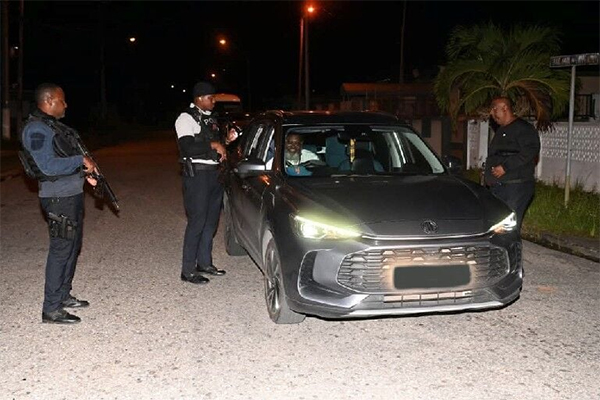
The criticism of the Special Operations Zone in Maloney exposes a remarkable level of political hypocrisy and a fundamental misunderstanding of national security operations.
Let me remind those now shouting about restrictions on constitutional rights that this is not the first time a government has restricted freedom of movement in the interest of protecting lives.
Under the previous PNM administration, public health regulations restricted movement throughout Trinidad and Tobago.
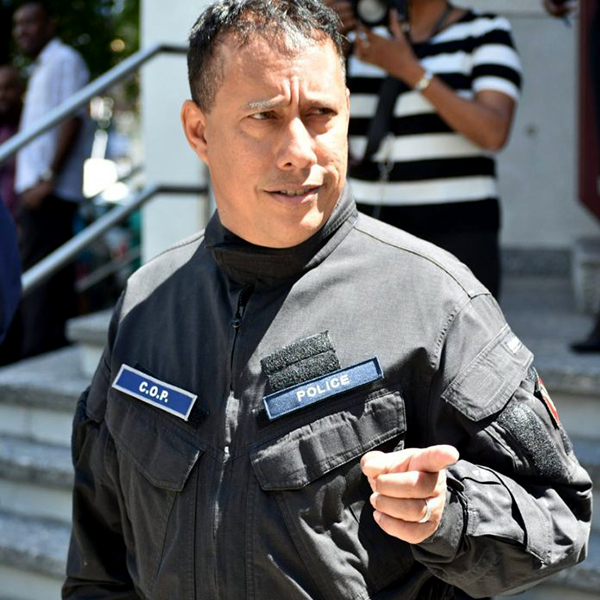
As Commissioner of Police, I personally authorised approximately 25,000 permits to allow essential personnel to continue functioning.
These included members of the protective services, healthcare workers, transport operators, energy sector employees, utility workers, bakery employees and others essential to keeping the country running.
Those restrictions were justified on the grounds of protecting public health and preventing deaths.
The principle today is no different. Then, the threat was a virus. Now, the threat is violent crime. In both circumstances, the objective is to save lives.
It is therefore astonishing that those who defended restrictions on movement under the previous administration now condemn similar measures when introduced by another government.
This does not mean that constituteional rights should be disregarded. Quite the opposite. The authorities must establish clear arrangements allowing law-abiding residents, workers, students and other legitimate persons to move without unnecessary hardship, while preserving the effectiveness of the operation.
There is also a serious misconception that Zones of Special Operations should be determined simply by comparing murder statistics between communities.
Policing is not a numbers game. It is an intelligence-driven operation.
An area with fewer recent murders may present a greater immediate threat if intelligence indicates that serious criminal activity is being planned. Conversely, an area with a higher murder count may not necessarily present the same imminent danger.
Police cannot simply chase murders from one community to another. That would be like setting a cricket field for bad bowling: reacting to what has already happened rather than anticipating what comes next.
The real value of a Zones of Special Operations is the ability to act immediately on credible intelligence. If police receive information about illegal firearms, drugs or planned criminal activity at a particular location, delays in securing warrants can allow criminals to relocate weapons, drugs or themselves before officers arrive.
However, such powers must never become an excuse for arbitrary searches, indiscriminate stop-and-frisk exercises or abuses of authority. They must be exercised professionally, lawfully and on the basis of credible intelligence.
This also highlights another serious failure in our national security infrastructure.
The National Operations Centre, established at a cost of approximately US$80 million, was intended to facilitate the rapid conversion of intelligence into coordinated operations. Instead, that capability has effectively been reduced to a 999 dispatch function, something the police already possess.
That represents an extraordinary waste of a critical national security investment.
A properly functioning National Operations Centre should allow intelligence to be received, assessed and translated into immediate operational action, precisely the capability required to make initiatives such as the Maloney Special Operations Zone effective.
Ultimately, this is not about supporting the government or the opposition. It is about protecting innocent citizens, preventing murders and ensuring that law enforcement has the tools to confront serious criminal threats.
Special Operations Zones must be temporary, targeted, intelligence-led and implemented with appropriate safeguards for law-abiding citizens.
Those who accepted restrictions to save lives during a public health emergency cannot now pretend that protecting lives from violent criminals is somehow an unacceptable objective.
The public deserves informed debate, not political opportunism.
National security must be guided by intelligence, operational effectiveness and the protection of lives — not by which political party happens to be in government.
