

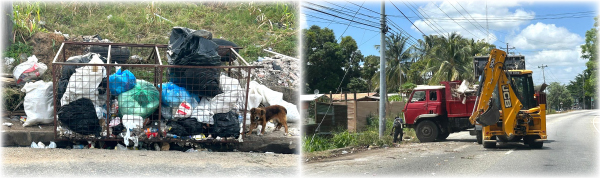



People are saying that the country must not wait for a public health crisis before acting. The conditions for one are already in place. Across major corridors like the Priority Bus Route, particularly in the Bangladesh area, garbage continues to pile up in plain sight—an open invitation to rodents and disease.
People are saying that hantavirus is not some distant, abstract threat. It is transmitted through contact with rodent urine, droppings, or saliva, and can even spread through bites or scratches. It leads to hantavirus pulmonary syndrome (HPS), a severe and potentially fatal respiratory illness. In a country already battling public health vulnerabilities, this is a risk we simply cannot afford to ignore.
While citizens have commended the Tunapuna/Piarco Regional Corporation for clearing garbage along sections of the PBR, the same urgency is not being demonstrated by the San Juan/Laventille Regional Corporation, particularly in Petit Bourg and surrounding communities. That inconsistency is dangerous.
People are saying that Trinidad and Tobago was fortunate during the COVID-19 pandemic, but luck is not policy. The real question is not whether we can afford better waste management and disease preparedness, it is whether we can afford to ignore the warning signs that are already before us. Poor sanitation, climate shifts, and biodiversity loss are not isolated issues; they are interconnected risks that demand immediate, coordinated action.
Victor Roberts’ Defection: Much Ado About Nothing
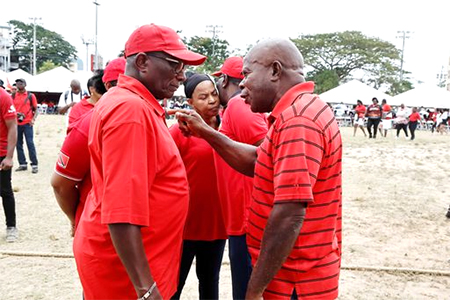
People are saying that the political noise surrounding Siparia Alderman Victor Roberts’ defection from the United National Congress (UNC) to the People’s National Movement (PNM) is wildly disproportionate to its significance.
Roberts cited disagreements with UNC policies following last year’s general election. People are asking, so what? Political disagreement is not news; it is the essence of democracy.
In mature democracies, such as the United Kingdom, Members of Parliament regularly clash with party leadership without triggering front-page hysteria. Under Keir Starmer, internal dissent within the Labour Party has been open and ongoing, yet it does not dominate national headlines in the way this minor political shift has locally.
People are saying that this reflects a troubling media culture, one that elevates political trivialities while more substantive national issues go underreported.
The double standard is even more glaring. When Alderman Paul Daniel Nahous left the National Transformation Alliance (NTA) to join the UNC, there was no comparable outrage, no calls for anti-defection legislation, no public handwringing. Now, suddenly, the conversation is different.
People are saying that in Trinidad and Tobago, outrage is often selective, and principles are too easily bent to suit political convenience.
Commendation to Prime Minister Mia Mottley
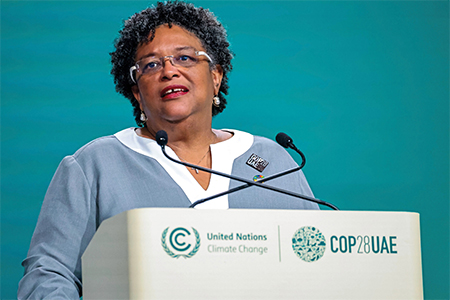
People are saying that while Trinidad and Tobago debates personalities, Barbados is quietly shaping its future.
Prime Minister Mia Mottley has introduced a bold and visionary policy: the Barbados Republic Child Wealth Fund. Under this initiative, every eligible child will receive a BBD$5,000 investment at birth, held in trust and grown over time to support education, housing, or entrepreneurship.
This is not just policy; it is foresight. And Basdeo Panday had mentioned this initiative when he was this country’s Prime Minister but it fell on deaf ears.
Mottley captured the spirit of the initiative when she declared that her government had come “to stop poor people from being poor.” She recognised that poverty is not only economic but social, rooted in inequality, lack of opportunity, and generational disadvantage.
People are saying that Barbados, with far fewer natural resources than Trinidad and Tobago, is demonstrating what leadership looks like: investing not just in today, but in tomorrow.
The uncomfortable question now arises, what have we done with our own wealth? What might Trinidad and Tobago look like today had similar foresight been applied decades ago?
T&T: An Incredible Country—For All the Wrong Reasons
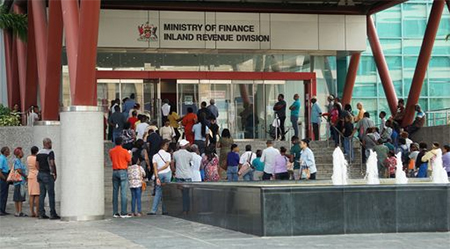
People are saying that in Trinidad and Tobago, the absurd has become normal.
Imagine this: citizens must arrive at government offices by 5:00 a.m. to secure a number—just for the chance to pay their property taxes. Only ten numbers are issued daily. If you are the eleventh person, you are turned away.
This is not governance. This is dysfunction.
People are saying that the elderly are the most affected, forced to endure long waits, often carrying large sums of cash, exposed to both physical strain and criminal risk, and despite repeated public complaints, the system remains unchanged.
What does it say about a country where paying taxes, a basic civic duty, requires such hardship?
People are saying that this system has persisted for over a year, ignored by those in authority, and as is too often the case, meaningful action may only come after a tragedy forces the issue.
Dishonest Quarry Operators
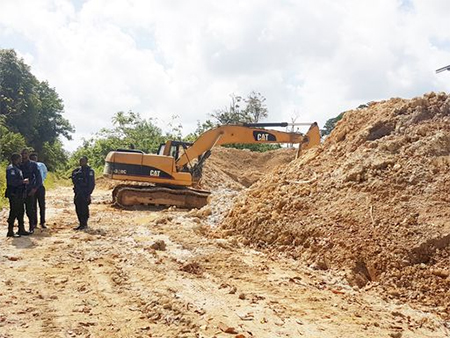
People are saying that while law-abiding citizens struggle with inefficiencies and neglect, illegal quarry operators continue to exploit the system with little fear of consequence.
This is not merely an environmental issue; it is a governance failure. Illegal quarrying degrades land, threatens communities, and robs the State of revenue. Yet enforcement remains inconsistent, and accountability elusive.
People are asking: who benefits from this silence? And why does the law seem to apply unevenly?
People are saying that corruption is rampant in the nation’s quarrying operations and that hundreds of thousands of dollars in bribes are paid by illegal quarry operators to quarry control officers to turn a blind eye to the illegal activity. Who is guarding the guards, people are asking.
