





By Dr Jack Warner
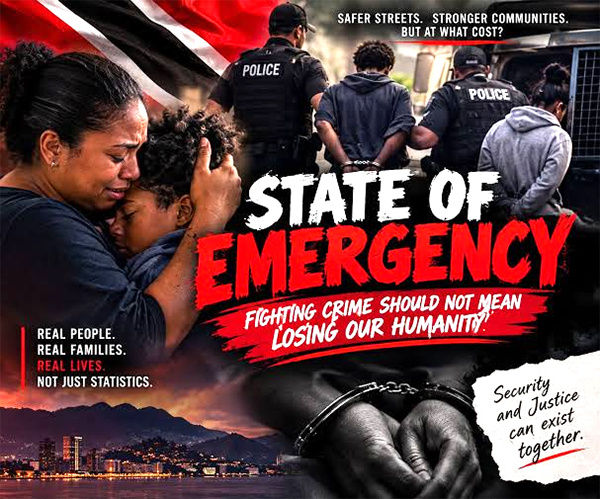
Trinidad and Tobago faces an extraordinary statistic: 13,317 criminal charges laid against 8,067 individuals during three states of emergency between December 2024 and September 2026. The figures suggest an enormous mobilisation of police resources and an aggressive response to criminal activity. But they leave unanswered the question that should matter most to every citizen: how many of those charges have resulted in convictions, and what lasting impact have these extraordinary measures had on public safety?
According to figures released by the Trinidad and Tobago Police Service in response to a Freedom of Information Act request, 3,440 charges were laid during the first emergency, 5,320 during the second and 4,557 during the third. Yet the information provided did not identify how many cases resulted in convictions, acquittals, dismissals or proceedings still before the courts.
That omission is significant. Arrests and charges demonstrate enforcement activity; they do not establish guilt, successful prosecution or the dismantling of criminal organisations. A functioning criminal justice system must ultimately be judged by what happens after suspects enter the courts, not simply by how many people are taken into custody.

This distinction matters especially when governments invoke emergency powers that temporarily restrict fundamental freedoms.
The first emergency began in December 2024 under the previous PNM administration. The Persad-Bissessar Government declared two subsequent emergencies. Both administrations therefore have an obligation to explain how effective these interventions were.
Government supporters can reasonably point to evidence of operational achievements. Homeland Security Minister Roger Alexander reported that serious crimes declined by approximately 14 per cent between January and September 2026 compared with the corresponding period in 2025. Police also reported substantial firearms and ammunition seizures during emergency operations.
These results deserve acknowledgement. Removing illegal weapons and disrupting criminal activity can protect lives, even where prosecutions remain incomplete.
But declining reported crime during an emergency does not automatically establish that emergency powers caused the improvement or that the gains will endure. Crime trends may reflect several influences, including policing strategies, changes in criminal activity, community cooperation and longer-term enforcement initiatives.
There is also a difference between preventing an imminent violent act and securing a criminal conviction. Intelligence-led interventions may legitimately disrupt threats before offences occur. Their effectiveness must therefore be assessed through several measures, not convictions alone.

Nevertheless, the justice system should follow through on criminal charges. Citizens deserve to know whether investigations are sufficiently thorough, evidence is properly collected, witnesses are protected, and prosecutors have the resources to bring cases to successful conclusions.
The absence of publicly available case outcomes creates an accountability gap. It does not prove that prosecutions have failed; many cases may still be pending. But without reliable information, neither the government nor the opposition can confidently claim that the thousands of charges represent lasting criminal justice success.
Equally troubling is the risk of treating repeated states of emergency as a substitute for permanent institutional reform.
Emergency powers may be necessary when an immediate threat overwhelms ordinary policing arrangements. They cannot become the principal measure of a country’s determination to fight crime. If extraordinary powers are repeatedly required, policymakers must ask whether ordinary investigative, prosecutorial and preventive capabilities are being strengthened sufficiently.
The Government should therefore publish a comprehensive assessment of all three emergencies, identifying the categories of offences charged, cases pending, convictions secured, charges dismissed and average time taken to dispose of proceedings.
That assessment should distinguish ordinary criminal charges from preventive detention arrangements, since detention without charge serves a different legal purpose and cannot be equated with prosecution.
Parliament should also receive evidence of the impact on murders, shootings, extortion, organised criminal networks and illegal firearms trafficking, using comparable reporting periods and clearly defined indicators.

Most importantly, the country needs a sustained strategy that goes beyond arrests: stronger forensic services, effective witness protection, intelligence coordination, financial investigations targeting criminal proceeds, and meaningful intervention for young people vulnerable to recruitment into gangs.
These reforms are neither glamorous nor politically convenient. They require investment, institutional discipline and patience. But they address the foundations of criminal activity rather than merely its immediate manifestations.
The public deserves protection from violent criminals. It also deserves protection from the misuse of exceptional state powers. These responsibilities complement, not contradict, each other.
Trinidad and Tobago must recognise the work of officers confronting dangerous criminal networks while insisting that government performance be measured transparently and fairly.
Thirteen thousand charges may demonstrate the intensity of the fight against crime. They do not, by themselves, tell us whether the country is winning it. The real test is whether justice is delivered, criminal networks are weakened, and citizens remain safer long after emergency powers have expired.
