






It Is Time to Modernise Trinidad and Tobago’s Statute Books
By Dr Jack Warner
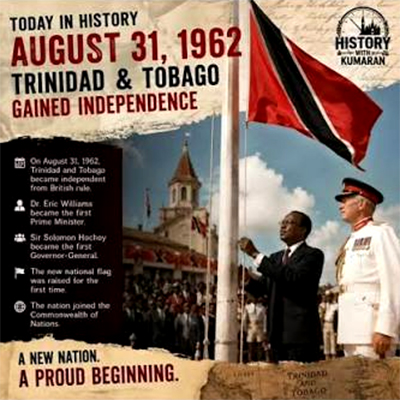
Trinidad and Tobago became independent in 1962 and a Republic in 1976. Yet scattered throughout our statute books are laws whose origins stretch back not merely to before Independence, but to the nineteenth century, when this country was a British colony; telephones were novelties, computers belonged to science fiction, and the Internet was unimaginable. There is something fundamentally wrong with that picture.
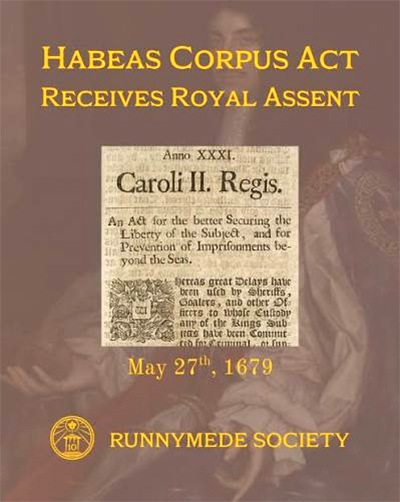
This is not an argument for recklessly throwing old laws into a legislative bonfire. A law does not become useless simply because it is old. Habeas corpus, for example, represents a centuries-old protection against arbitrary detention whose importance has certainly not diminished with age. The issue is fitness for purpose.
Can legislation conceived for the social, technological and commercial realities of colonial Trinidad adequately govern a digital Republic in 2026? That question deserves urgent national attention.
Consider some of what remains within our legal architecture. The Evidence Act traces its legislative origins to 1848. The Habeas Corpus Act dates to 1841. The Remedies of Creditors Act originates in 1845. The Registration of Deeds Act dates from 1884, the Building Societies Act from 1890 and the Notaries Public Act from 1894.
Moving into the twentieth century, the picture remains remarkable. The Larceny Act originated in 1919. So did the Coroners Act and Employment Exchange Act. The Sedition Act dates from 1920, the Summary Offences Act from 1921, the Jury Act from 1922 and the Trade Unions Act from 1932.
Many have subsequently been amended. That distinction is essential. Their original dates do not mean every provision remains frozen in the nineteenth or early twentieth century, but amendments themselves can become part of the problem.
Instead of periodically replacing antiquated legislative frameworks with coherent modern statutes, countries can accumulate layer upon layer of amendments until legislation becomes a legal patchwork: old language, newer provisions, obsolete assumptions and modern requirements stitched together across generations. Meanwhile, the world the law regulates has been transformed.
In 1848, evidence meant witnesses, paper documents and physical objects. Today, evidence may exist inside a smartphone, an encrypted messaging application, a cloud server, a vehicle computer, a CCTV system, or a social media account. Artificial intelligence can generate realistic voices, photographs and videos. Financial transactions can cross jurisdictions electronically in seconds. Criminal conspiracies can operate without participants ever occupying the same room. Shouldn’t our evidentiary architecture be comprehensively designed for that world?
The same question applies across government. Land registration now belongs in an integrated digital environment where ownership, planning permissions, mortgages and transactions can be efficiently authenticated and searched.
Labour law must confront remote employment, platform work, multinational employers, algorithmic management and an economy increasingly dominated by services and technology. Commercial legislation must recognise electronic contracts, digital identities, cross-border transactions and new forms of assets, and Criminal law must contend with cybercrime, identity theft, sophisticated financial fraud, digital evidence and criminal enterprises operating across multiple jurisdictions.
Even our approach to public order deserves examination. Laws such as the Sedition Act were created within a colonial political environment in which the State’s relationship with citizens was fundamentally different. A modern democratic Republic should periodically ask whether restrictions inherited from the colonial government remain necessary, proportionate and compatible with contemporary constitutional protections for expression.
This is why Trinidad and Tobago needs a National Law Modernisation Commission.
Not another committee assembled after a controversy and forgotten when public attention moves elsewhere. It should be a permanent, technically competent body mandated to examine the entire statute book systematically.
Every law should face six basic tests: age, constitutional compatibility, enforceability, continuing relevance, technological adequacy and compatibility with contemporary social and economic conditions. The Commission should classify legislation accordingly.
Some laws would remain largely untouched because they continue working effectively. Others would require amendment. Some should be consolidated with overlapping statutes, while others should be rewritten entirely. And legislation serving no meaningful contemporary purpose should finally be repealed.
The process should also be transparent. Publish an annual list of statutes scheduled for review. Invite submissions from judges, attorneys, police officers, businesses, trade unions, universities, civil-society organisations and ordinary citizens who actually encounter these laws. Then publish recommendations and require the government to tell Parliament what it intends to do about them. That final requirement matters.

Trinidad and Tobago has never suffered from a shortage of reports. Our national archives could probably be reinforced with enough shelves to accommodate recommendations governments commissioned and subsequently ignored. Modernisation must therefore have deadlines. Parliament itself should adopt a rolling legislative renewal programme so that a defined number of major statutes are comprehensively reviewed every year.
Technology legislation should face particularly frequent examination because technological change now moves faster than traditional legislative cycles.
There is also an economic argument. Outdated laws impose costs. Slow property registration delays investment. Antiquated commercial procedures increase transaction expenses. Unclear regulation discourages entrepreneurship. Laws incapable of addressing contemporary financial crime create opportunities for criminals. Administrative processes designed around paper consume public-sector time and frustrate citizens. Legal modernisation is therefore not academic housekeeping; it is economic infrastructure.
Investors need predictable laws. Police need enforceable laws. Courts need coherent laws. Businesses need efficient laws. Citizens need laws they can understand, and democracy requires laws reflecting the society citizens presently inhabit rather than one their ancestors occupied under colonial administration.
There is something symbolically important here as well. Trinidad and Tobago will celebrate fifty years as a Republic in 2026. What does republicanism mean if substantial portions of the machinery governing citizens still originate from institutions designed for colonial subjects?
Decolonisation cannot merely mean changing the flag, anthem and constitutional head of state. It should also mean examining the rules through which the State exercises authority. We should not abolish a statute because a British colonial legislature enacted it. Nor should we retain one simply because generations have become accustomed to its existence. The only defensible question is whether it remains good law for Trinidad and Tobago today.
A confident Republic should be prepared to ask that question of every statute on its books. We maintain bridges because structures deteriorate. We update computer systems because technology changes. We revise medical protocols because knowledge advances. Why should the laws governing an entire country escape the same scrutiny?
Trinidad and Tobago is attempting to build a digital economy, confront twenty-first-century crime, attract international investment and govern an increasingly sophisticated society.
We cannot seriously aspire to become a twenty-first-century Republic while portions of our legal operating system were written for a nineteenth-century colony.
It is time to update our codes.
