


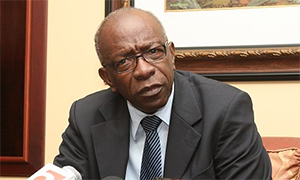



Dr Jack Warner, a former Minister of National Security,examines lessons from England, Scotland, the United States, and Jamaica—and outlines the institutional changes Trinidad and Tobago needs to make its communities safer.
Interviewer: Trinidad and Tobago has struggled with violent crime for decades. What, in your assessment, is fundamentally missing from our response?
Dr Warner: What we need is continuity, coordination and accountability. Too often, our national conversation begins with the latest murder figures and ends with demands for more police patrols, tougher penalties or emergency powers.
These measures may have their place, but crime reduction requires something more comprehensive.
We must understand the criminal networks responsible for violence, interrupt their access to weapons and money, improve the probability of detection and prosecution, and prevent young people from being recruited into criminal activity.
Above all, we need a strategy that survives changes of government.
Interviewer: Are there countries that demonstrate that serious violence can be reduced?
Dr Warner: Yes, and we should study their experiences without pretending that their circumstances are identical to ours.
In England’s West Midlands, police recorded 157 firearms discharges in 2020, compared with 77 in 2025. That represents a reduction of approximately 51 per cent.
In Boston, the original Operation Ceasefire programme was associated with a 63 per cent reduction in average monthly youth homicides during the evaluation period in the 1990s.
Scotland recorded 137 homicide victims in 2004–2005 and 57 in 2023–2024, a reduction of approximately 58 per cent over twenty years.
Closer to home, Jamaica reported 673 murders in 2025, compared with 1,147 in 2024, a reduction of approximately 41 per cent.
These are different jurisdictions, periods, and measures of violence. They should not be treated as directly comparable. Nevertheless, they demonstrate that significant reductions are possible.
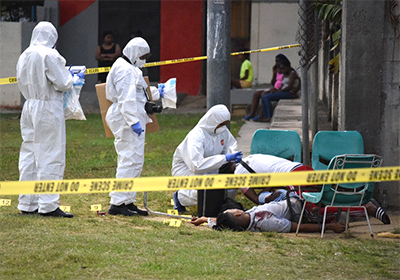
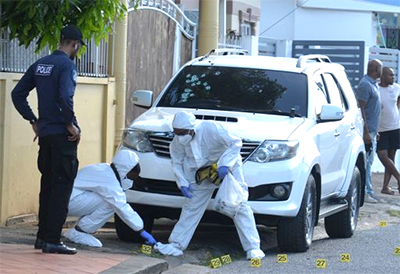
Diego Martin. The victims were Corey “Crime” Nickels, 31, and Venezuelan
national Edgar Viaje, 23
Interviewer: What explains the progress in the West Midlands?
Dr Warner: West Midlands Police has placed considerable emphasis on specialist investigations, intelligence gathering, firearms seizures and disrupting organised criminal networks.
Its approach extends beyond identifying the person who pulls the trigger. Investigators also examine firearms suppliers, drug trafficking, money laundering and criminal exploitation.
That distinction matters.
If we arrest a gunman but leave his supplier, financier and criminal organisation untouched, we have addressed only part of the problem.
Trinidad and Tobago must strengthen its investigative capacity to identify the entire criminal enterprise.
Interviewer: What did Boston do differently?
Dr Warner: Boston’s Operation Ceasefire focused attention on the groups and individuals most closely associated with serious gun violence.
It combined targeted law enforcement against firearms trafficking with a clear message that further violence would attract coordinated consequences.
Importantly, community organisations, outreach workers, and other partners also helped people seeking alternatives to violence.
The programme’s evaluation associated it with substantial reductions in youth homicide, gun assaults and reports of shots fired.
The lesson is that enforcement should be precise, coordinated and accompanied by credible opportunities to disengage from crime.
Interviewer: Does that mean we should stop conducting large-scale police operations?
Dr Warner: No. Police operations are necessary, particularly when there is an immediate threat to public safety.
But we should distinguish operational activity from strategic success.
How many criminal networks have been dismantled? How many illegal firearms supply routes have been identified? How many serious cases result in successful prosecutions? Are shootings declining in the communities where interventions occur?
An arrest statistic tells us what the police did. It does not necessarily tell us how much safer the country has become.
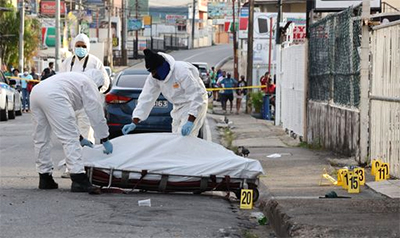
who was shot and killed on Cipero Street, San Fernando
Interviewer: Scotland has also experienced a substantial long-term reduction in homicide. What should we learn from that experience?
Dr Warner: Scotland’s experience demonstrates the importance of treating violence as both a criminal justice problem and a public health concern.
Its violence-reduction approach has involved cooperation across policing, health, education, community organisations and social services.
The underlying principle is that violence has identifiable risk factors and that prevention must begin before someone becomes a victim or an offender.
But we must be careful about attributing Scotland’s entire long-term reduction to any one programme. Several social, policing and demographic factors may have contributed.
For Trinidad and Tobago, the relevant lesson is institutional cooperation, supported by evidence and sustained over time.
Interviewer: Jamaica’s recent decline in murders is particularly relevant because it is another Caribbean society. What does its experience tell us?
Dr Warner: Jamaica’s reported reduction is significant and deserves careful examination.
Its experience raises questions about intelligence-led enforcement, organised crime investigations, firearms control, institutional coordination and the role of social intervention.
However, we must distinguish the observed decline from claims about what caused it. We need to examine which measures contributed, whether improvements occurred across communities and whether the reductions can be sustained.
The lesson is not to copy Jamaica uncritically. It is to study the evidence, understand the methods and determine what is appropriate for Trinidad and Tobago.
Interviewer: Trinidad and Tobago has repeatedly resorted to states of emergency. Can emergency powers deliver lasting reductions in crime?
Dr Warner: Emergency powers may provide temporary operational advantages in exceptional circumstances. Their use must remain lawful, necessary, proportionate and accountable.
But emergency powers cannot replace criminal intelligence, effective investigations, witness protection, functioning courts and programmes that prevent recruitment into organised crime.
The critical question is what remains after the emergency ends.
If the criminal organisations retain their weapons suppliers, financial resources, recruitment networks and ability to intimidate witnesses, then the underlying problem remains.
We should judge emergency measures by demonstrable results and their consequences for public confidence and civil liberties, not merely by the number of operations conducted.
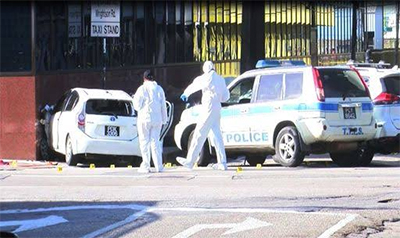
of four men on Independence Square, Port-of-Spain
Interviewer: What should Trinidad and Tobago do about the illegal firearms entering the country?
Dr Warner: We must treat firearms trafficking as an organised criminal enterprise.
That requires effective maritime surveillance, intelligence-sharing, customs enforcement, forensic tracing, financial investigations and international cooperation.
Every recovered firearm should be examined for the intelligence it can provide about trafficking routes, suppliers and links to other crimes.
The Police Service, Coast Guard, Customs and relevant regional and international partners must work from a coordinated operational framework.
Our objective should be to dismantle supply networks, not simply to recover weapons after they have been used.
Interviewer: How important is the relationship between the police and communities?
Dr Warner: It is indispensable.
The police cannot investigate serious crime effectively without information, witnesses and public cooperation.
But cooperation depends upon trust.
Residents must believe that information will be handled responsibly, that witnesses will be protected and that police operations will distinguish between offenders and law-abiding citizens.
Community policing cannot be reduced to occasional visits or public relations exercises. It must involve sustained engagement, responsiveness and professional accountability.
When citizens fear criminals and distrust the institutions responsible for protecting them, organised crime benefits.
Interviewer: What role should the education system play?
Dr Warner: A central role.
Crime prevention must begin long before a young person encounters the criminal justice system.
Schools should be supported in identifying disengagement, persistent absenteeism, behavioural difficulties, exposure to violence and other circumstances that may increase vulnerability.
We also need accessible after-school activities, mentoring, sports, cultural programmes, technical training and pathways into legitimate employment.
These initiatives should not be treated as recreational extras. They should form part of a properly designed national prevention strategy.
However, we must evaluate their outcomes. Participation alone is not proof that a programme reduces crime.
after the shooting of a prison officer at Sparrow Avenue, Barataria
Interviewer: What institutional reform would you place at the centre of a new national strategy?
Dr Warner: I would propose a permanent National Crime and Violence Reduction Council, supported by an operational secretariat and an independent evaluation function.
It should bring together national security, education, health, social development, justice, local government, religious organisations, relevant community organisations and the private sector.
Its responsibilities should be clearly defined: identify violence concentrations, coordinate interventions, allocate resources according to risk, monitor performance and publish results.
This must not become another advisory committee without authority or accountability.
Its value would depend upon whether it improves decisions and produces measurable outcomes.
Interviewer: What about the criminal justice system? Can policing succeed if prosecutions are delayed?
Dr Warner: No crime-reduction strategy can ignore the wider justice system.
We must improve investigative quality, forensic capacity, case preparation, witness support and the timely disposition of criminal matters.
The objective should not be simply to increase punishment. It should be to improve the certainty that serious offenders will be identified, lawfully prosecuted and held accountable.
Public confidence depends upon the justice system functioning effectively from investigation through trial.
Police operations that generate arrests without sustainable cases will not deliver the outcomes citizens expect.
Interviewer: How should the public measure success?
Dr Warner: We need a national crime-reduction scorecard with clearly defined indicators.
It should report homicide, firearm-related deaths and injuries, shootings, detection and prosecution outcomes, firearms tracing results and progress against organised criminal networks.
It should also measure prevention outcomes, including school retention, participation in targeted interventions and sustained disengagement from violence.
These statistics must be published consistently, with independent scrutiny and explanations of changes in reporting methods.
The purpose is not to produce attractive figures for a press conference. It is to establish whether citizens are genuinely becoming safer.
Interviewer: What would you say to those who argue that the country simply needs tougher laws?
Dr Warner: Laws are necessary, but their effectiveness depends upon enforcement, institutional capacity and respect for due process.
A tougher penalty achieves little if the probability of detecting and prosecuting an offender remains low.
We should therefore ask whether proposed legislation addresses an identifiable operational weakness, whether the relevant agencies can implement it and how its effectiveness will be evaluated.
National security policy should be based upon evidence, not the assumption that every new offence or increased penalty automatically produces greater safety.
Interviewer: Finally, what is the single most important message you would deliver to the Government, Opposition and people of Trinidad and Tobago?
Dr Warner: We must stop approaching crime as a succession of emergencies and begin treating it as a permanent national responsibility.
The experiences of the West Midlands, Boston, Scotland and Jamaica demonstrate that substantial reductions in violence are possible, although their methods and results require careful interpretation.
Trinidad and Tobago needs a coordinated strategy that targets violent criminal networks, disrupts firearms trafficking, strengthens investigations and prosecutions, protects communities and prevents vulnerable young people from entering criminal activity.
That strategy must have measurable objectives, stable funding, independent evaluation and continuity beyond the political cycle.
Government must lead. The Opposition must scrutinise and contribute credible alternatives. Security institutions must be accountable. Communities must be genuine partners.
Our citizens deserve more than announcements, operations and assurances.
They deserve evidence that their country is becoming safer.
The true measure of national security is not how many extraordinary powers the State exercises, but how effectively it protects lives, reduces violence, and restores citizens’ freedom to live without fear.
Crime scene investigators on the scene of a double murder in Four Roads, Diego Martin. The victims were Corey “Crime” Nickels, 31, and Venezuelan national Edgar Viaje, 23
Undertakers prepare to remove the body of murder victim Junior Chase who was shot and killed on Cipero Street, San Fernando
Crime Scene Investigators at the scene of the police involved shooting of four men on Independence Square, Port-of-Spain
A police officer looks on as Crime Scene Investigators collect evidence after the shooting of a prison officer at Sparrow Avenue, Barataria
