





By Dr Jack Warner
A troubling contradiction is emerging in Trinidad and Tobago’s economic landscape. While the Government promotes foreign investment as a cornerstone of national recovery, established businesses are closing, employees are losing their livelihoods, and questions are mounting about the country’s investment climate. The issue is not the ethnicity of business owners, nor their perceived political loyalties. The question is whether Trinidad and Tobago is creating an environment where businesses can survive, investors can prosper, and workers can earn a decent living.
Since the Persad-Bissessar administration assumed office in April 2025, several business closures have attracted public attention. Yet these developments must be examined against a wider economic reality. Commercial difficulties did not begin with this Government. Foreign exchange shortages, declining consumer purchasing power, rising operating costs and prolonged economic uncertainty have burdened enterprises for years.
Nevertheless, a change of government creates expectations of renewed confidence, improved economic management and fresh opportunities. When closures continue and workers are displaced, citizens are entitled to ask whether those expectations are being fulfilled. The consequences extend far beyond the businesses themselves.

Every closure can remove wages from households, customers from neighbouring establishments, revenue from suppliers, and taxes from the Treasury. A retrenched employee is not merely another labour-market statistic. That worker may be a parent struggling with a mortgage, a young graduate supporting relatives or a breadwinner suddenly unable to meet basic obligations.
When enough businesses contract, the consequences ripple through communities. Consumer spending weakens, small enterprises lose customers, government revenue comes under pressure, and unemployment becomes increasingly difficult to reverse. This is why business retention must become as important to national economic policy as attracting new investment.
The 2027 National Budget projects revenue of approximately $59.73 billion against expenditure of $63.37 billion. Its economic strategy places considerable emphasis on investment, productive activity and anticipated improvements in energy-sector performance. Still, investment promotion cannot be separated from the experience of businesses already operating within the country.
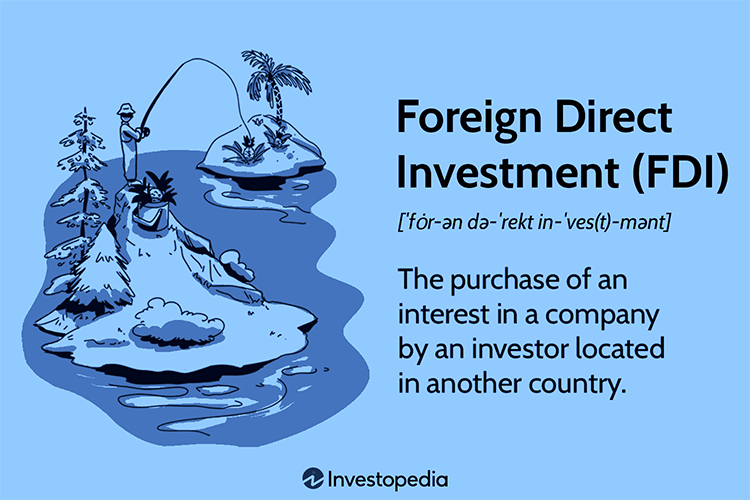
What message does Trinidad and Tobago send prospective foreign investors when established enterprises struggle to access foreign exchange, face uncertain operating costs, endure administrative delays, and face weak domestic demand?
Foreign investors do not judge a country solely by ministerial speeches, investment conferences or attractive fiscal incentives. They assess whether existing businesses can operate predictably, secure necessary inputs, access financing, resolve disputes, and earn sustainable returns.
An economy that cannot retain productive enterprises will face difficult questions when attempting to attract new ones.
The political dimension also deserves careful consideration. Relations between governments and parts of the business community can strain, particularly when disagreements involve taxation, regulation, public statements, or perceptions of unequal treatment. Such tensions are not unusual in democratic societies, but neither political affiliation nor ethnic identity should determine how businesses are treated, scrutinised or encouraged to invest.
The government has every right to enforce the law, collect taxes and demand corporate accountability. Business owners also have a legitimate right to criticise public policy, protect commercial interests, and make lawful investment decisions.
The danger arises when economic disagreements become personalised political confrontations. Even the perception that commercial opportunities depend on political favour can undermine confidence. This is why transparent rules, consistent enforcement and impartial institutions matter more than personal relationships between ministers and business leaders. Corporate responsibility must also be part of the conversation.
Employers contemplating closure should communicate honestly with workers, comply with retrenchment and severance obligations, and consider reasonable alternatives where commercially feasible. However, no enterprise can be expected to operate indefinitely at a loss to preserve employment.

The Government’s responsibility is therefore not to prevent every closure; That would be unrealistic. It is to identify systemic obstacles, intervene where appropriate and ensure displaced workers receive meaningful assistance.
Trinidad and Tobago needs a credible business-retention strategy, supported by regular engagement with employers, labour organisations and small-business representatives. It should prioritise access to foreign exchange, regulatory efficiency, investment facilitation, workforce retraining, and transparent monitoring of business closures.
Equally important, the Government should publish reliable information distinguishing actual business closures from companies merely removed from administrative registers. Without accurate data, public debate risks becoming a contest of exaggerated claims and political accusations.
The Opposition also has a responsibility to propose practical remedies rather than exploit every closure as evidence of government failure. Ultimately, economic recovery cannot be measured by investment announcements alone. It must be measured by enterprises operating successfully, jobs being created and retained, wages supporting families and opportunities expanding across communities.
Trinidad and Tobago cannot credibly invite the world to invest while neglecting the businesses and workers already sustaining its economy. Governments may change, and companies may close, but the unemployed worker still has a family to feed. That must remain the central concern of national economic policy.
