


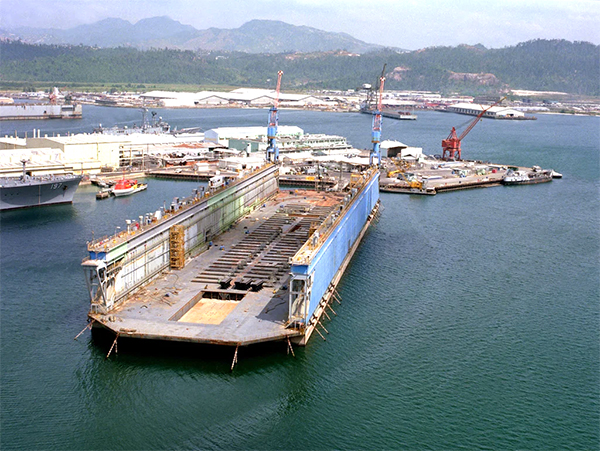



Taxpayers Hooked for Millions More as the MV Goliath Flounders
By Peter Green, Investigative Journalist
PORT OF SPAIN — It was supposed to signal a lucrative new chapter for Trinidad and Tobago’s maritime sector. Instead, the MV Goliath floating dry dock is rapidly becoming a monument to a familiar national crisis: questionable public spending, opaque state procurement, and taxpayers left holding a massive, unexpected bill.
According to explosive information provided to this desk, the MV Goliath was leased by the PNM for two years at a staggering reported total cost of US$16 million. The arrangement, which reportedly commenced in March 2025 and runs through March 2027, was sold to the public as an immediate solution for Government vessel maintenance.
If these figures are accurate, the public is entitled to ask one simple, devastating question: What exactly are taxpayers getting for their money?
The Procurement Trail
Public records confirm that the National Infrastructure Development Company (NIDCO), acting through the Ministry of Transport, issued a 2024 RFP for a semi-submersible barge. The pitch was clear: a two-year lease (with an option for a third) to service the State’s fleet while the country awaited a new-build dry dock.
That is the official narrative. But beneath the surface lies a tangled web of hidden costs, missing operational components, and an alarming influx of supplementary state spending.
Missing Equipment and the “Four-Month” Fiasco
Investigations reveal shocking allegations regarding the state of the vessel upon its arrival. Information suggests the Goliath arrived severely under-equipped, lacking critical lifting equipment and cranes necessary to perform its sole function.
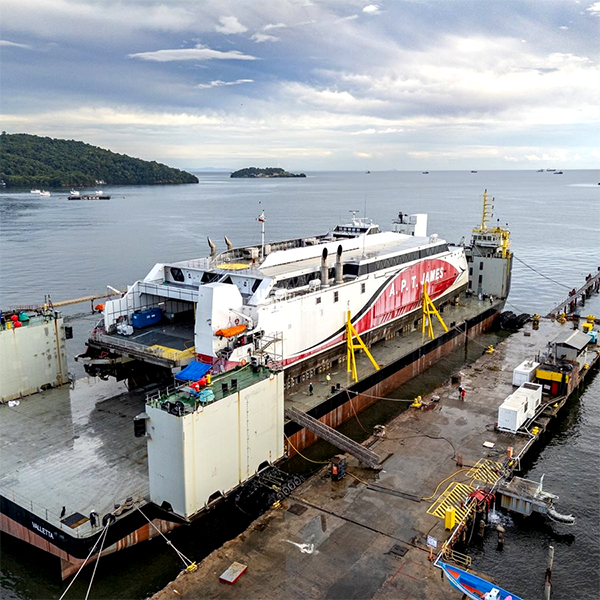
Consequently, the ATP James went to Caridoc for emergency repairs, bleeding approximately TT$7 million from the Treasury just to reach a partially operational state.
Now, the situation has moved from incompetent to nonsensical. A staggering TT$35 million is currently being pushed through NIDCO for “anchoring works” to make the barge usable. However, sources indicate these works will only be completed with approximately four months left on the original lease.
This creates a terrifying financial ultimatum: To get any value from the TT35million” upgrade,” the Government will almost certainly be forced to renew the lease in March 2027 potentiallycommittinganotherUS16 million to a vessel that has spent more time being repaired than working.
The Private Capital Freeze-Out
Perhaps the most damning allegation involves the deliberate sidelining of private investment. Sources indicate that both local and foreign investors are currently willing to enter a private partnership to develop these drydocking services a move that would instantly relieve the burden on the public purse.
Yet, it is alleged that a Request for Information (RFI) involving these foreign investors is being intentionally withheld by the Ministry, clearing the path for the State to spend another TT$35 million.
Hard Questions for the State
This investigation goes beyond a single vessel; it strikes at the heart of how this country is managed. As the MV Goliath sits in the water, the public must demand answers to four critical questions:
- Can the Government successfully run a state agency or business? Or are these entities destined to be perpetual drains on the Treasury?
- Can it operate to make a profit? If the state cannot manage a single barge without multi-million -dollar bailouts, how can it claim to lead a maritime revolution?
- Is this the best use of “precious” US dollars? At a time when foreign exchange is a scarce and vital resource, is it responsible to sink US$32 million (over two terms) into a leased asset that arrived unfit for purpose?
- Who actually stands to benefit from this arrangement? If the taxpayers are losing and the private sector is being locked out, who is winning?
Trinidad and Tobago has spoken for decades about building a robust maritime economy. But a world-class sector cannot be built on ribbon-cuttings and vague promises. It requires commercial discipline and an ironclad commitment to protecting the Treasury.
The public deserves a full, unredacted accounting of the MV Goliath. We need to know why private investors are allegedly being sidelined while the State continues to write blank checks for a vessel that will only be “ready” when the contract is nearly over.
If a leased barge costing millions of US dollars still requires tens of millions of TT dollars just to function, this is not a success story. It is a financial sinkhole.
A new vessel. An old problem. The same unanswered questions. Until the Ministry and NIDCO provide the truth, the MV Goliath will remain a glaring reminder of the high cost of doing state business in the dark. It seems that the more things change, the more they remain the same as far as NIDCO is concerned.
