






By Dr Jack Austin Warner
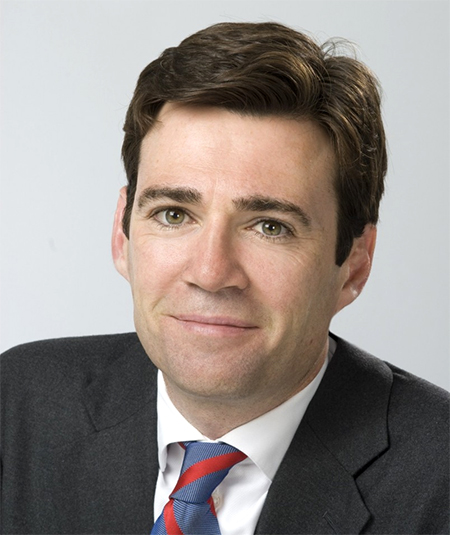
At first glance, Britain’s latest political drama appears straightforward. A popular regional leader, Andy Burnham, has returned to Parliament and is openly positioning himself as a potential successor to Prime Minister Keir Starmer. Labour MPs are restless. Opinion polls are troubling. Reform UK continues to gain ground. The governing party is divided, and questions are being asked about whether Starmer can survive.
Well the answer is that he cannot survive and earlier this morning h announced he will resign as Prime Minister, paving the way for Andy Burnham to take over the reins at No10.Sir Keir, who has spent the weekend mulling his political future, has asked Labour’s governing body to set out a timetable to replace him, beginning on July 9, and ending by the summer recess to “ensure a new leader is in place before Parliament returns in September”. He said he would do all he can to ensure an “orderly” transition of power and that becoming Prime Minister was the “proudest moment of my life”. His voice cracked during his emotional speech outside No 10 Downing Street
However, beneath the headlines lies a much larger and more consequential story.
The real story is not about Andy Burnham. It is not even about Keir Starmer. The hidden story is that Britain, like much of the Western world, is experiencing a profound crisis of political legitimacy. Voters are not simply changing their minds about individual leaders. Increasingly, they are losing faith in the ability of established political institutions to improve their lives.
That is the common thread connecting political upheaval across the United Kingdom, the United States, France, Germany, Italy, and other advanced democracies. Citizens are becoming less interested in ideological labels and more interested in one simple question: Is the system working? For many, the answer is increasingly no.
The article highlights Burnham’s claim that “politics isn’t working” and that Britain is not where it should be. Those words resonate because they capture a growing public frustration that extends far beyond party politics.
Britain has spent nearly two decades lurching from one crisis to another. There was the global financial crisis of 2008, then years of economic stagnation, then Brexit. COVID-19, inflation, and a cost-of-living crisis, then pressures on the public services. Throughout this period, successive governments have promised renewal while many ordinary citizens have experienced declining living standards, deteriorated public infrastructure, and growing economic insecurity. The result is a widening gap between political promises and lived reality.
This explains why traditional political loyalties are weakening. Across Britain, voters are increasingly willing to abandon parties they supported for generations. Working-class voters who once formed Labour’s backbone have drifted toward Reform UK. Progressive voters are flirting with the Green Party. Conservatives have experienced their own electoral collapse. The old political coalitions are fragmenting.
What makes this development particularly significant is that it reflects a broader international trend.
For decades, mainstream centre-left and centre-right parties governed on the assumption that economic growth, globalisation, and incremental reform would gradually improve living standards. That assumption has become increasingly difficult to sustain. Many citizens now feel that the benefits of economic growth have accrued disproportionately to financial centres, multinational corporations, and highly educated urban elites, while communities outside major metropolitan areas have been left behind.
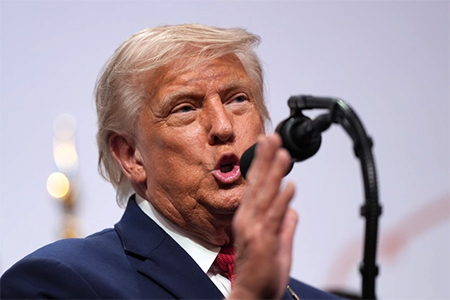
This sentiment is not unique to Britain. It helped fuel Donald Trump’s rise in the United States. It contributed to the success of right-wing populist parties across Europe. It explains the growth of anti-establishment movements from France to the Netherlands.
Seen through this lens, Burnham’s emergence is not simply a Labour Party story. It is an attempt to answer a question confronting political systems across the West: how can mainstream politics reconnect with voters who believe the system no longer serves them?
Burnham repeatedly emphasises an economy that works “for everybody, not a few in far-off places.” That language is telling. It reflects a recognition that the central political divide of the twenty-first century may no longer be left versus right. Instead, it may increasingly be establishment versus anti-establishment, insiders versus outsiders, and global centres versus local communities.
This is why the rise of Reform UK should concern Labour, especially since Burnham ultimately replaces Starmer. Reform’s appeal is not solely ideological. It is rooted in a perception that traditional institutions have become disconnected from ordinary citizens. Replacing one leader with another does not automatically solve that problem. Indeed, that may be the greatest danger facing Britain today.
Political parties continue to interpret electoral setbacks as leadership problems when they may actually be symptoms of something much deeper. Changing the face at the top may provide temporary relief, but it does not necessarily address public dissatisfaction with housing affordability, stagnant wages, declining public services, immigration pressures, infrastructure challenges, and regional inequality.
The hidden story behind Britain’s political turmoil is therefore not the struggle between Burnham and Starmer; it is the struggle between a political establishment attempting to preserve public confidence and an electorate that increasingly doubts whether any of its institutions can deliver meaningful change.
The outcome of that struggle will determine far more than who occupies 10 Downing Street.
It may ultimately determine whether the traditional model of Western democratic politics can regain the trust of the citizens it was created to serve.
