





By Dr Jack Austin Warner
To many around the world, the United Kingdom represents order, stability, and the rule of law. It is a country associated with effective policing, functioning institutions, and relatively low levels of violent crime compared with many other parts of the world. Yet beneath that image lies an extensive criminal underworld that generates billions of pounds annually, exploits thousands of vulnerable people, and extends from the streets of London to the ports of Liverpool, the industrial estates of Birmingham, and the housing communities of Manchester.
Unlike the stereotypical mafia portrayed in films, Britain’s organised crime landscape is fragmented, adaptive, and increasingly sophisticated. UK law enforcement agencies estimate that thousands of organised crime groups operate across the country, involving hundreds of thousands of individuals in varying capacities. These networks engage in activities ranging from cocaine trafficking and human smuggling to cybercrime, fraud, modern slavery, and large-scale money laundering.
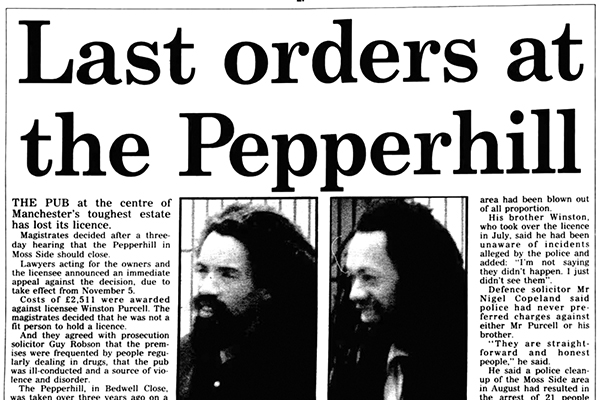
Some criminal groups have become associated with particular regions. In Birmingham, groups such as the 247365 network have been linked to heroin and cocaine distribution, while remnants of the once-notorious Burger Bar Gang are reported to retain influence within elements of the Midlands’ criminal landscape. Liverpool has experienced the activities of groups including the Croxteth Crew, while Manchester has grappled with organisations such as the Cheetham Hill Gang, the Cooch Gang, and the Pepperhill Mob. Glasgow continues to experience violence linked to long-running organised crime feuds, while Northern Ireland faces criminal enterprises connected to dissident paramilitary elements involved in activities such as drug trafficking and extortion.
Yet these names represent only the visible edge of a much larger criminal economy.
Increasingly, Britain’s criminal networks operate less like neighbourhood gangs defending street corners and more like multinational enterprises. Albanian-speaking organised crime groups have emerged as major players in wholesale cocaine importation, often working alongside Latin American cartels and local distributors. Vietnamese criminal networks have been repeatedly linked to sophisticated cannabis cultivation operations, frequently relying on trafficked labour. Turkish, Irish, and Eastern European criminal organisations continue to exert influence in various illicit markets, while cybercriminal groups operating from overseas target British businesses and financial institutions through ransomware attacks and online fraud.
Perhaps the most disturbing development has been the emergence of the County Lines model. Under this system, urban gangs establish drug distribution routes into smaller towns and rural communities using dedicated mobile telephone numbers known as “county lines.” Children and vulnerable adults are groomed, coerced, and trafficked into transporting drugs, cash, and weapons. Homes belonging to vulnerable individuals are sometimes taken over by dealers in a practice known as “cuckooing.” What was once regarded as primarily an urban problem has spread into communities that previously had little exposure to organised drug markets.
The consequences extend far beyond drug trafficking. County Lines operations have been linked to knife crime, intimidation, the exploitation of minors, and violence against women and girls. The UK Home Office has identified thousands of children at risk of, or involved in, criminal exploitation in recent years, although officials acknowledge that the true figure is likely much higher.

Despite this, fear in Britain manifests differently from that in countries plagued by highly visible gang warfare. Most Britons are unlikely to witness a public gun battle or encounter heavily armed criminal factions openly challenging the authority of the state. Instead, organised crime often operates in the shadows. Its victims are frequently hidden: the teenager groomed into transporting cocaine, the migrant trapped in forced labour, the pensioner defrauded online, the small business unknowingly drawn into money laundering, or the vulnerable resident whose home has been commandeered for drug dealing.
This hidden nature creates a dangerous misconception. Because much of organised crime remains invisible to the average citizen, it is often perceived as a problem affecting someone else. In reality, its effects ripple throughout society by increasing insurance costs, fuelling violence, burdening the courts, exploiting children, corrupting legitimate businesses, and placing enormous pressure on policing and social services.
To Britain’s credit, law enforcement agencies have responded aggressively. Thousands of County Lines drug routes have reportedly been disrupted, major trafficking networks dismantled, and international partnerships strengthened. Yet authorities acknowledge that organised crime groups remain remarkably adaptable, often replacing arrested members quickly, shifting operations to encrypted communications platforms, and expanding into new criminal markets.
The lesson is that organised crime cannot be measured solely by homicide statistics or dramatic headlines. A country may enjoy comparatively low murder rates while still confronting a vast criminal economy that quietly undermines communities, exploits vulnerable people, and erodes public confidence in public institutions. Britain’s experience demonstrates that organised crime evolves alongside technology, globalisation, and opportunity.
The greatest danger is not always the violence people see on the evening news; it is the criminal enterprise they never see at all—until its consequences reach their own neighbourhood.
