




How does democracy die?
It doesn’t arrive as insurgents storming the Parliament.
It doesn’t announce itself with tanks on the streets.
It doesn’t come with a violent coup.
Democracy dies when citizens become afraid to speak and those entrusted with power see criticism, not as a constitutional right, but as a threat to be suppressed.
We have already been subject to an onerous SOE for 12 of the last 14 months. It has become Government’s failed policy on crime.
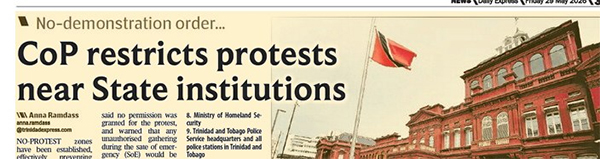
However, the recent designation of fifteen ‘no protest zones’ has sent a chilling message to citizens wishing to peacefully air their grievances that the space for public dissent is shrinking.
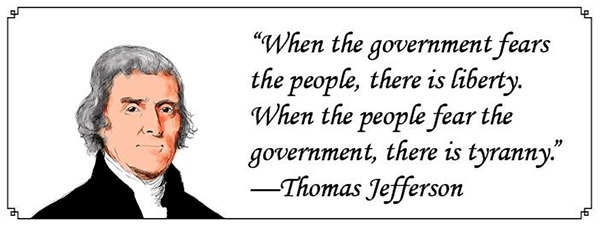
This strikes at the heart of our constitutional democracy.
The Constitution of Trinidad and Tobago recognises freedom of expression and freedom of assembly as fundamental rights because the framers of our Constitution recognised that governments cannot be trusted to police themselves.
These are not gifts granted by politicians. These are not privileges that can be switched on and off depending on who is in office. They are rights belonging to the people and they exist precisely so that citizens can challenge governments, expose failures and demand accountability.
Today our nation is bleeding with festering wounds that every citizen feels.Terrorized communities suffering from murder, home invasions and domestic violence, broken families, businesses on the verge of collapse, thousands on the breadline, young people looking for a future outside. War on nurses, war on teachers, war on maxi taxi owners, war on business, war on Caricom. And instead of launching a war on poverty, the government has unleashed a war on the poor.
But rather than confronting these failures, as the government was elected to do, and paid handsomely for, the State is increasingly focused on controlling the reaction to its failures.
When citizens complain, silence them.
When citizens organize, restrict them.
When citizens protest, arrest and contain them.
When citizens demand answers, accuse them of threatening law and order.
History teaches us that every authoritarian movement begins with the same argument.
“We are only protecting order”
“Law abiding citizens have nothing to fear”
“We are responding to extraordinary circumstances “
“These restrictions are only temporary”
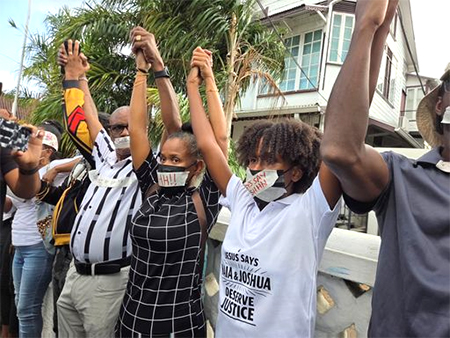
But, temporary becomes permanent.
Extraordinary becomes Ordinary. And restrictions become NORMAL.
And before we know it, freedoms that took generations to secure, disappear, one regulation at a time.
This is why every citizen should be concerned.
Not because you support one party instead of another.
Not because you agree with every protest.
But because rights that are denied to your opponents today can be denied to you and your children tomorrow.
Freedom is freedom. It cannot survive selective outrage and if you only defend liberty when it benefits your side, you are not defending liberty, you are defending power of the tribe.

Democracy survives only when ordinary citizens refuse to surrender it.
It survives when people speak out even though they are afraid or discouraged. It survives when the people stand together to let those in ‘power’ know that real power belongs to the people. It always has and always will, so long as we are willing to defend it.
Let us not forget that it is peaceful civic action that has historically driven change in Trinidad and Tobago.
The Watermen’s Strike of 1919 laid the groundwork for workers’ rights and political reform.
The Butler Labour Riots of 1937 led workers protesting poor wages, exploitation, racism and terrible working conditions. Labour day commemorates these events.
Universal Adult Suffrage was a campaign by labour leaders, activists and civil society that led to all citizens having a vote in 1945.
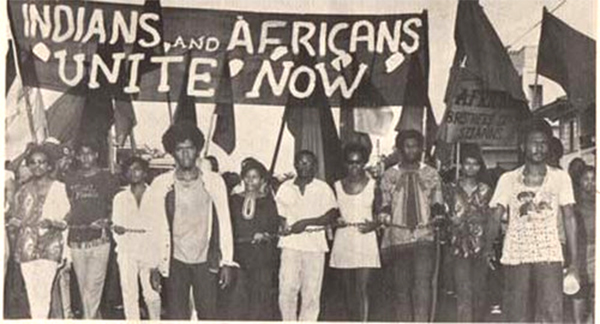
The Black Power Movement of 1970 when Makandal Daaga, Khafra Kambon, trade unions, students, workers and ordinary citizens mobilized against economic inequality, racial injustice and foreign domination of the economy.
The Public Order Bill which would have severely restricted civil liberties and protest activity was withdrawn by government after the Opposition, civic groups, unions and ordinary citizens mobilised against it.
The Death March in 2005 sparked by the murder of Keith Noel brought thousands of citizens of all backgrounds into Port of Spain to protest soaring murder rates.
These struggles were won because thousands of citizens organized, spoke out, marched, protested, unionised and demanded change.
These are the actions that shaped the course of our nation.
Today Trinidad and Tobago is facing such a moment.
History will remember this time for whether we stood up while we still could or waited until there was nothing left to stand for.
Because once a population becomes silent, power becomes fearless. And power without fear of the people is the most dangerous force in any country.
Every generation is tested.
This is OURS.
Vasant Bharath
