





By Joey Bartlett
Two years after a devastating marine heatwave left nearly 80 per cent of Buccoo Reef’s surveyed corals bleached, scientists are making progress in efforts to restore the damaged ecosystem.
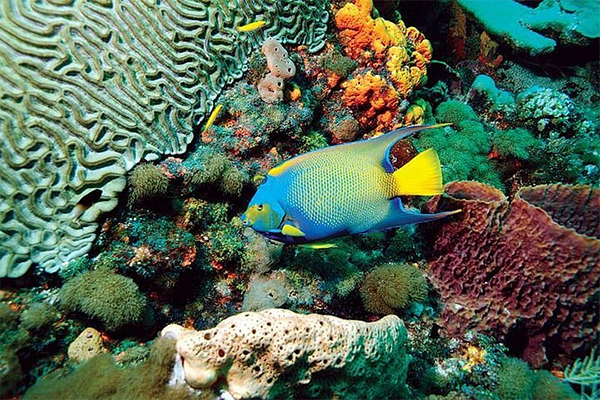
Hundreds of young brain corals have been successfully bred by the Institute of Marine Affairs (IMA). The juvenile corals have settled on specially designed units and have been transferred to underwater nurseries off Buccoo.
The development offers hope for Tobago’s struggling reefs. These ecosystems support the island’s fishing industry, protect its coastlines and underpin much of its marine tourism.
In a November 20 progress update, the IMA confirmed the successful settlement of juvenile grooved brain corals. They were produced through sexual propagation under its Marine Resilience Initiative (MARIN Tobago). The project is being carried out in partnership with SECORE International and Tobago Agri-Technology Services (TAGS).
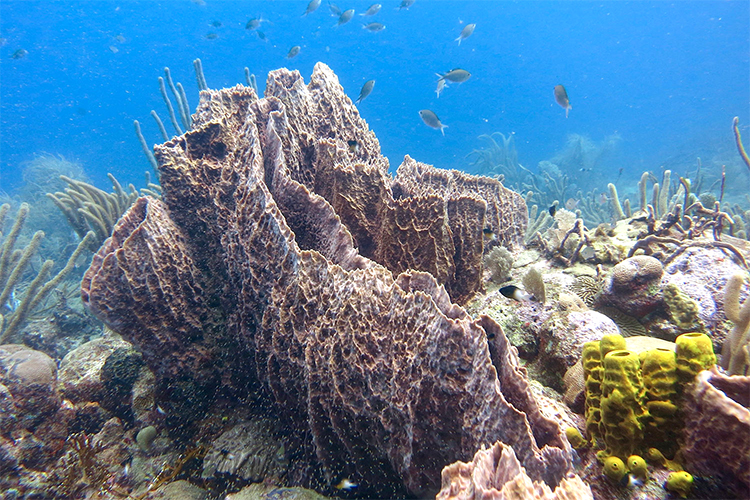
A 2008 World Resources Institute valuation estimated Tobago’s coral reefs generate between US$120 million and US$164 million in annual economic benefits. The figures are expressed in 2006 US dollars. But the latest breeding success comes against a worrying backdrop of continued coral decline.
A reef under pressure
An IMA rapid assessment conducted in November 2024 found widespread signs of heat stress across Tobago’s reefs. The findings were led by IMA coral reef ecologist Dr Anjani Ganase and highlighted in the Trinidad and Tobago Field Naturalists’ Club journal, Living World.
Researchers surveyed eight reef sites across southwestern and northeastern Tobago. These included Buccoo Outer, Mt Irvine, Culloden West, Castara, Booby Island, Melville Drift, Angel Reef and Black Jack Hole. Seven of the eight sites had more than half their corals showing signs of heat stress, paling or recent death.
Buccoo Reef was among the hardest hit. Researchers found 78.6 per cent of surveyed corals there were bleached. It recorded complete mortality in two significant coral patches; large staghorn coral stand in Buccoo’s outer lagoon and an elkhorn coral patch in the eastern back reef.
The damage followed unusually high sea temperatures during the 2024 marine heatwave. Water temperatures hovered around 30°C and reached as high as 33°C in some areas. This exceeded Tobago’s reported thermal threshold of 29.4°C.
Corals depend on microscopic algae called zooxanthellae for much of their food and colour. When sea temperatures become too high, corals expel these algae. This causes them to turn white. Bleached corals are not dead, but prolonged heat stress weakens them and increases their risk of mortality.
By October 2024, the heatwave had pushed both islands to the highest coral bleaching alert level issued by the US National Oceanic and Atmospheric Administration (NOAA).
Growing corals from the next generation
The MARIN Tobago project is exploring a different approach to reef restoration. Traditional coral gardening involves breaking off fragments from existing colonies. These fragments are then grown elsewhere.
The IMA team is also using sexual propagation to produce new corals. This involves collecting eggs and sperm released during natural spawning events. Scientists then use the reproductive material to produce larvae that can settle and develop into young corals. It produces genetically diverse offspring.
Unlike fragments taken from an existing colony, sexually produced corals carry new combinations of genetic material. This could improve the chances of developing populations better equipped to withstand changing environmental conditions.
The project recorded its first spawning success in Charlotteville in July 2025. Researchers later collected reproductive material from 16 grooved brain coral colonies at Mt Irvine Reef in June 2026.
The resulting larvae settled onto specially designed seeding units. They were then transferred to the Buccoo underwater nurseries. IMA also reported encouraging results from experiments comparing different settlement methods.
Challenge beyond the nursery
Despite the promising results, scientists are not yet declaring victory. Getting coral larvae to settle is only the beginning. The young colonies must survive and grow. It must also demonstrate it can withstand the conditions they will eventually face on degraded reefs.
The IMA team is monitoring the Buccoo nurseries. Researchers are assessing survival rates, growth, disease resistance and heat tolerance. The findings will help determine when the young corals are ready to be transplanted onto damaged reef areas.
For Tobago, the outcome extends beyond the survival of a single coral species. Healthy reefs help absorb wave energy. This reduces coastal erosion and protects beaches and other infrastructure.
It also provides habitats and nursery grounds for fish. These are essential to commercial fishing and the livelihoods of local communities. Continued deterioration of ecosystems poses a serious threat to fisherfolk, dive operators and tourism businesses.
It could also undermine Tobago’s reputation as an eco-tourism destination.
