


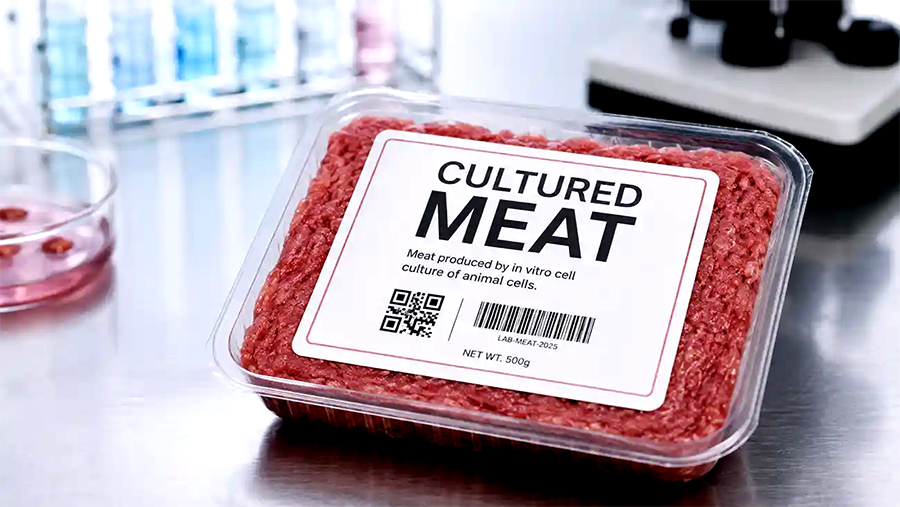



The world is approaching a major food revolution, and Trinidad and Tobago has an opportunity to become a participant rather than a spectator.
For decades, our country has depended heavily on imported food, spending billions of dollars in foreign exchange to feed our population. We complain about foreign-exchange shortages, rising food prices and our dependence on imports, yet we continue to overlook opportunities to develop entirely new industries.
One such opportunity is the emerging science of artificially produced food.
Traditional agriculture and animal husbandry are facing increasing pressures from climate change, droughts, flooding, declining agricultural land, rising production costs, water shortages and growing global demand for food.
Scientists are already developing meat cultivated from animal cells, dairy proteins produced through precision fermentation, plant-based meat alternatives and other innovative sources of nutrition.
This is not science fiction. It is an emerging commercial industry that could fundamentally change how the world produces and consumes food.
But the opportunity for Trinidad and Tobago goes much further than simply importing these products.
WHY CAN’T WE PRODUCE THEM HERE?
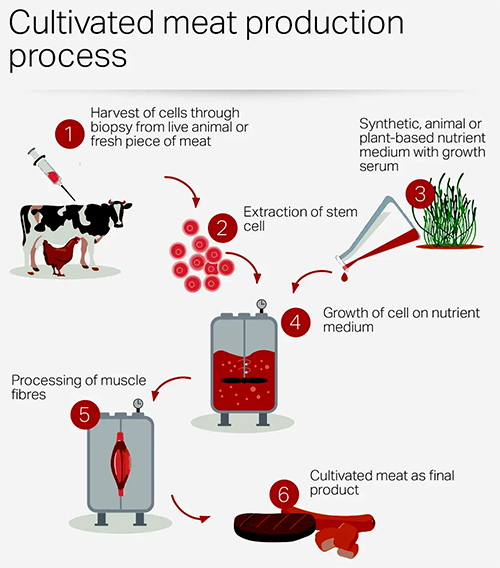
Imagine attracting international investors to establish food biotechnology and alternative-protein manufacturing facilities in Trinidad and Tobago.
Imagine producing cultivated meat, fermentation-derived dairy proteins and other food products for our domestic market and exporting surplus production to the Caribbean, North America and other international markets.
We could create employment for scientists, engineers, technicians, agricultural specialists, manufacturing workers and supporting businesses.
We could develop research partnerships with universities, attract foreign investment, encourage technology transfer and establish a completely new manufacturing sector.
Most importantly, we could reduce our food import bill while generating much-needed foreign exchange through exports.
THIS IS THE KIND OF ECONOMIC DIVERSIFICATION WE SHOULD BE PURSUING.
We already understand the importance of foreign exchange from our energy industry. Why should we not develop another industry capable of earning foreign exchange while addressing one of humanity’s most fundamental needs?
However, we must approach this opportunity intelligently.
The Government must insist on independent scientific testing, internationally recognised food-safety standards, nutritional assessments, transparent labelling and proper regulatory approval.
Consumers must know exactly what they are purchasing. Artificially produced food must not be marketed deceptively or presented as nutritionally equivalent to traditional food without proper scientific evidence.
Affordability, quality and consumer confidence will determine whether this industry succeeds.
Nor should we abandon traditional farmers, fishermen and livestock producers. They remain essential to our food security. Modern biotechnology should complement traditional agriculture, not destroy it.
Our universities, research institutions, agricultural sector and private investors should be brought together to examine the commercial possibilities.
Government should commission a feasibility study identifying investment opportunities, potential export markets, energy requirements, production costs and the regulatory framework needed to attract international manufacturers.
We should also examine whether our existing industrial infrastructure, energy resources and manufacturing capabilities could give us a competitive advantage.
WE CANNOT CONTINUE COMPLAINING ABOUT OUR SHORTAGE OF FOREIGN EXCHANGE WHILE IGNORING NEW INDUSTRIES THAT COULD EARN IT.
The global food industry is evolving. Countries that invest early in research, technology and manufacturing could secure valuable positions in tomorrow’s international markets.
Trinidad and Tobago has spent decades depending on energy exports. We must now look beyond oil and gas and identify the next generation of foreign-exchange earners.
Food is not going out of fashion. The world will always need it.
Why shouldn’t Trinidad and Tobago become a producer, manufacturer and exporter of tomorrow’s food?
The opportunity is there. The question is whether our policymakers have the vision, urgency and determination to seize it.
We cannot afford to be left behind again.
THE FUTURE OF FOOD COULD BECOME THE FUTURE OF OUR ECONOMY.
Gordon Laughlin,
Westmoorings
